AVSI in Haiti
- Port-au-Prince HQ Office Phone + (509) 2943 2076
[email protected] - Local branches Ouest, Nord-Ouest, Nord, Artibonite, Sud, Sud-Est.
Since 1999, AVSI has remained present in Haiti, continuing to work alongside communities. Today, it operates in areas most affected by violence and displacement, combining humanitarian response, protection, health, nutrition, education and economic development.
Over nearly thirty years of presence, AVSI has built relationships with communities and developed an in-depth knowledge of the local context. This enables the organization to reach areas of the capital affected by high levels of violence and to operate in some of the most challenging environments.
Haiti today
The humanitarian crisis in Haiti continues to deteriorate. Political instability, gang violence, the deterioration of essential services and economic hardship have further aggravated an already extremely fragile situation.
In 2026, more than 6.4 million people, over half of the country's population, are estimated to be in need of humanitarian assistance. Internal displacement has increased rapidly, while violence, initially concentrated mainly in the Port-au-Prince metropolitan area, has spread to other regions, including Artibonite.
Insecurity has severely affected access to food and basic services. Nearly 6 million people are facing food insecurity, while many health facilities are no longer fully operational, limiting access to healthcare.
These challenges are compounded by Haiti's vulnerability to the effects of climate change. Located along the hurricane belt, Haiti is frequently affected by extreme weather events that destroy homes, infrastructure and livelihoods. Hurricane Melissa, which hit the country in October 2025, further increased humanitarian needs, causing extensive damage and disrupting the economic activities of thousands of families.
A presence built over time
AVSI's presence in Haiti began in 1999 following a request from the Apostolic Nuncio to support the Faculty of Agricultural Sciences of the Université Notre Dame d'Haïti in Les Cayes.
Over the years, AVSI's work has evolved alongside the changing needs of the country. Emergency response has been complemented by interventions in nutrition and health, education and child protection, livelihoods and economic development.
Since 1999, AVSI has maintained a continuous presence in Haiti. This longstanding presence enables the organization to operate today in different areas of the country, including the Port-au-Prince metropolitan area, Artibonite, the North-West, the South and the South-East.
Its knowledge of the local context and the relationships built over time with communities enable AVSI to operate in areas where access is made difficult by violence and insecurity, focusing on people and families in the most vulnerable situations.
Responding rapidly to emergencies
When a sudden crisis causes new displacement or worsens the situation of already vulnerable families, AVSI intervenes through the Rapid Response Mechanism (RRM).
The response is based on rapid needs assessments and coordination with humanitarian actors operating in the area. Within this framework, AVSI provides cash transfers to the most vulnerable families, identified according to vulnerability criteria, enabling them to meet essential needs quickly and decide how to use the resources according to their priorities.
As part of its emergency response, AVSI has established Community Resource Centres (CRCs) in Artibonite. These are local points of reference where displaced people and host communities can access information, referrals to services, psychosocial support and opportunities for participation.
The CRCs help strengthen the connection between humanitarian response and local communities, facilitating access to services and helping people navigate a context marked by instability and displacement.
Nutrition and health: an integrated response rooted in communities
In Haiti, AVSI works to prevent and address child malnutrition and facilitate access to healthcare, strengthening the role of communities in the early identification of cases and access to services.
Awareness-raising and training activities for families promote appropriate feeding practices and the use of locally available products. Parent-led groups conduct community-based nutrition screenings, identify the most vulnerable cases and facilitate access to health services through referral systems to appropriate facilities.

In areas affected by violence, mobile clinics provide care for children under five suffering from acute malnutrition. AVSI also supports local health facilities through the provision of supplies, rehabilitation works and staff training, helping maintain continuity of care even in the most challenging contexts.
These interventions are complemented by cash transfers to the most vulnerable families, enabling them to access food independently while also contributing to the local economy and markets.
From assistance to self-reliance
Emergency response can also provide a starting point for strengthening families' ability to build their own future.
In the North-West, AVSI accompanies families involved in humanitarian programmes towards economic development and greater self-reliance. Smallholder farmers receive seeds, technical assistance and support throughout the production process.
At the same time, AVSI supports a network of six food-processing centres that produce fortified flours used in school feeding programmes. These activities contribute to strengthening local value chains and creating economic opportunities in the area.
AVSI also implements cash-for-work activities to rehabilitate agricultural infrastructure, such as irrigation canals, as well as other community assets and infrastructure identified together with local communities. These activities also contribute to sustaining the income of participating families.

Particular attention is given to women's economic empowerment. After assessing the most viable economic opportunities in different local contexts, AVSI accompanies small entrepreneurs and traders through training, access to savings and credit groups, and support to develop micro-enterprises, including activities in trade, fishing and the transportation of goods.
Education and child protection: ensuring the right to education even in areas affected by violence
In a context where violence and displacement can interrupt children's education for months or even years, AVSI promotes access to safe, quality education.
Interventions include the distribution of school kits, support for education in emergencies and the provision of catch-up courses for children and adolescents whose education has been interrupted by conflict, in some cases for several years.
AVSI also provides training for teachers and education staff on child protection and the prevention of violence, exploitation and abuse, contributing to safer and more inclusive learning environments.
In communities affected by displacement, child-friendly spaces (Espaces Amis des Enfants) are established as safe places where children can take part in recreational and artistic activities and receive psychosocial support.
Ensuring continuity in education therefore means protecting a fundamental right and offering children and adolescents a space where they can rebuild relationships, continue learning and regain a sense of perspective for the future.
Protection and response to gender-based violence
In a context marked by increasing gender-based violence, AVSI provides an integrated response for women and girls who have experienced violence or are at risk.
Interventions include free mobile gynaecological clinics, individual psychological support and referrals to medical, legal and accommodation services.
AVSI also works with local community-based organizations to strengthen their role in preventing gender-based violence and protecting people in vulnerable situations.
The nexus: from emergency response to peacebuilding
In Haiti, AVSI connects responses to immediate needs with longer-term approaches that strengthen families and communities over time.
This approach integrates humanitarian assistance, development and peacebuilding: from responding to displacement to preventing malnutrition, from child protection and access to education to strengthening livelihoods and economic self-reliance.
In practice, a nexus approach means responding to an emergency while also looking ahead: helping a family address an immediate crisis while strengthening the capacities that can help them cope with future crises.
AVSI's continuous presence makes it possible to build this process together with communities, drawing on the knowledge, relationships and resources already present in the local context.
“Violence has deep roots and unacceptable manifestations, but one of the factors that fuels it is the lack of viable alternatives for girls and boys: there are no jobs, and this expands the pool from which gangs recruit new members. It is very important not to leave young people to fend for themselves, but to support their economic self-reliance and their future.”
Fiammetta Cappellini, Humanitarian Aid Unit Manager, AVSI
Nearly 30 years of responding to emergencies
Over the years, AVSI's continuous presence in Haiti has translated into a response to some of the country's major emergencies.
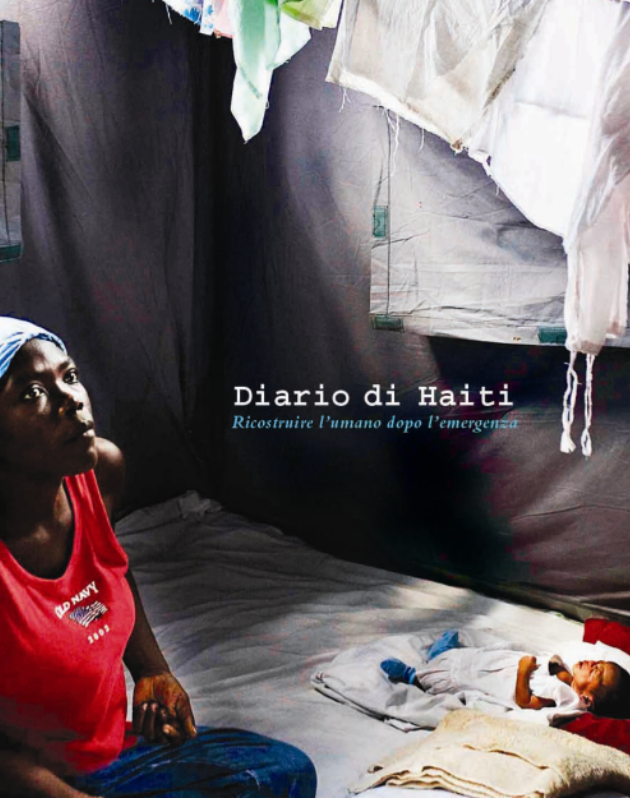
2010 — The earthquake
On 12 January 2010, a magnitude 7 earthquake killed more than 230,000 people in Haiti and devastated the country.
AVSI staff responded in the affected areas and reached 45,000 people, thanks to the contribution of thousands of donors in Italy and around the world. A total of 17 facilities, including nutrition centres and schools, were also rehabilitated or built, and they continue to serve thousands of children and their families today.
2016 — Hurricane Matthew
On 4 October 2016, Hurricane Matthew hit Haiti as a Category 5 hurricane, causing extensive damage, destroying homes and leaving many communities without food, water and essential services.
AVSI responded in the affected areas with emergency interventions and reached people who had been isolated and left without homes or food. The response also included identifying schools and centres requiring rehabilitation and restoring access to water in the affected areas.
2021 — The magnitude 7.2 earthquake
On 14 August 2021, a magnitude 7.2 earthquake struck Haiti, further aggravating the situation in an already extremely fragile country.
In the first hours following the earthquake, AVSI staff assessed conditions in the most vulnerable neighbourhoods of Les Cayes, particularly La Savane and Deye Fo, and distributed plastic sheeting to provide emergency shelter to displaced families and communities.
Logistical challenges, compounded by roads made impassable by the earthquake, delayed access to the most remote and severely affected rural communities.
A few days later, the situation was further aggravated by Tropical Storm Grace.
AVSI responded by setting up reception facilities for displaced families and distributing food, water and hygiene kits, as well as providing cash transfers and nutrition assistance.
Particular attention was given to protecting children and young people, through dedicated child-friendly spaces and temporary education facilities to ensure continuity of learning.
2025 — Hurricane Melissa
In October 2025, Hurricane Melissa hit Haiti, causing flooding and extensive damage, particularly in the South, South-East and Grand'Anse departments.
AVSI contributed to the emergency response by providing logistical and monitoring support to organizations involved in the humanitarian response.
Together with local communities, AVSI also implemented cash-for-work activities to rehabilitate damaged infrastructure, while contributing to the recovery of the livelihoods of affected families.
Staying, understanding, building the future
For nearly thirty years, AVSI has continued to work alongside people and communities in Haiti.
In a country marked by violence, displacement, economic hardship and recurring climate-related emergencies, continuous presence makes it possible to respond to emergencies while also building pathways towards the future.
From responding to urgent needs to protection, from education to health and economic self-reliance, AVSI's work in Haiti places people at the centre and strengthens communities' capacity to build new opportunities.