
On Thursday, October 1, in collaboration with the Lombardy Region, AVSI and Soleterre organized the event "Integration and social cohesion: best practices and perspectives for Europe. A dialogue on successful experiences in migrant integration through training and employment" at the Region's Delegation in Brussels, at Place du Champ De Mars 2.
Europe is at a particularly significant juncture. As Member States continue to seek common ground and forge agreements, and negotiations shape the new 2028–2034 Multiannual Financial Framework, migrant reception remains one of the most prominent and divisive issues on the European agenda.
This event provided an opportunity for reflection and exchange on good practices for the integration of refugees and migrants through training and regular access to the labor market, with the aim of highlighting concrete experiences developed throughout the entire integration pathway, presenting successful cases and replicable models that can inform those responsible for shaping European policies.
The event
The dialogue, moderated by Alessandra Fabbretti, journalist at Italian news agency DIRE, opened with welcoming remarks from Giuseppe Costa, Director of the Lombardy Region Delegation to the European Union in Brussels; Raffaele Cattaneo, Undersecretary for International and European Relations of the Lombardy Region; and Valentina Valfré, Head of the International Program Work IS Progress – Social and Labour Inclusion at Soleterre.
The first panel, “From emergency displacement to inclusion: the SIP project,” focused on SIP, implemented in Italy and Poland by Soleterre, AVSI, AVSI Polska, and Fundacja Ośrodek Badań nad Migracjami, with the support of ESF+.
Building on direct engagement with Ukrainian refugees, the project tested a flexible, multidisciplinary approach combining outreach, information, and tailored support through a one-stop-shop model. The experiences in Italy and Poland highlighted how employment, language support, legal status, housing needs, well-being, and access to services are closely interconnected. A shared lesson emerged: for inclusion to be effective, it requires coordinated, person-centered support.
The panel brought together Federica Lucrezia, Project Manager, Work IS Progress – Soleterre; Stefano Sangalli, AVSI4Community Project Manager; Kamila Fialkowska, Researcher at Fundacja Ośrodek Badań nad Migracjami; and Magdalena Zuberek-Wasinska, M&E and Project Manager at AVSI Polska.
The panel opened with a project video produced by the DIRE news agency, media partner of the initiative:

The second panel, “Work for integration: the LINFA, Maharat and SDM4EU II projects,” started from a central question: what does it take to turn labour mobility into a pathway toward long-term integration?
The experiences of the three projects offered valuable insights and possible answers: securing an employment contract is only one part of the journey. Effective labour mobility starts before departure, with language and technical training tailored to real needs, skills recognition, and adequate preparation for the destination country. It continues after arrival through housing support, access to services, mentoring, and support in the workplace.
Another important dimension is what remains beyond individual projects. Labour mobility pathways take time to develop and test, but they also need to become sustainable. All the actors involved, including companies, institutions, training providers, and civil society organizations, have a role and a responsibility to play, both in countries of destination and countries of origin.
The panel brought together Emanuele Gobbi Frattini, AVSI Country Representative in Tunisia; Dionigi Gianola, Strategic Partnership Development & International Mobility Director at Gi Group Holding; Nedal Zahran, Business Development Director at Leaders International; Cecilia Coccia, Grants Manager at the International Centre for Migration Policy Development (ICMPD); Sabine Boeltken, Area Director at GOPA Pro; and Monica Avogadri, Project Manager at Work IS Progress, Soleterre.
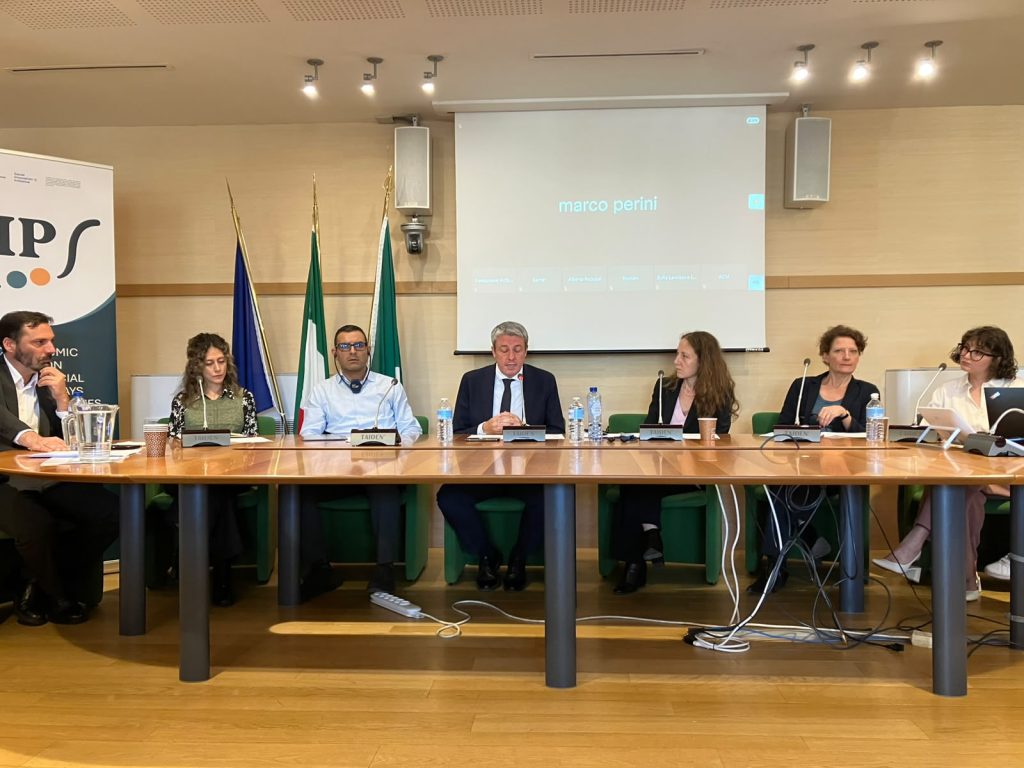
The closing panel, “Institutional perspectives on the future of EU integration policies: which recommendations should be taken forward”, brought together Silvio Grieco, DG HOME; Jader Cane, DG EMPL; Helena Winiarska, DG MENA; and Alfonso Balsamo, Confindustria Brussels, to reflect on how the experiences shared throughout the day can contribute to developing more structured approaches to integration and labor mobility, including through policies and institutional channels.
European funding, social innovation, skills recognition and cooperation with partner countries were at the heart of a broader discussion on how to build an effective European approach that upholds human dignity and is sustainable over time.
In his closing remarks, Giampaolo Silvestri, Secretary General of AVSI, highlighted a key lesson: complex challenges require a multistakeholder approach that brings together institutions, civil society, businesses, local authorities and academia. For AVSI, this also means keeping human development at the heart of future European policies: alongside economic and infrastructure development, Europe must continue to invest in education, skills and social cohesion, while recognizing the role of civil society in making integration a concrete reality.


