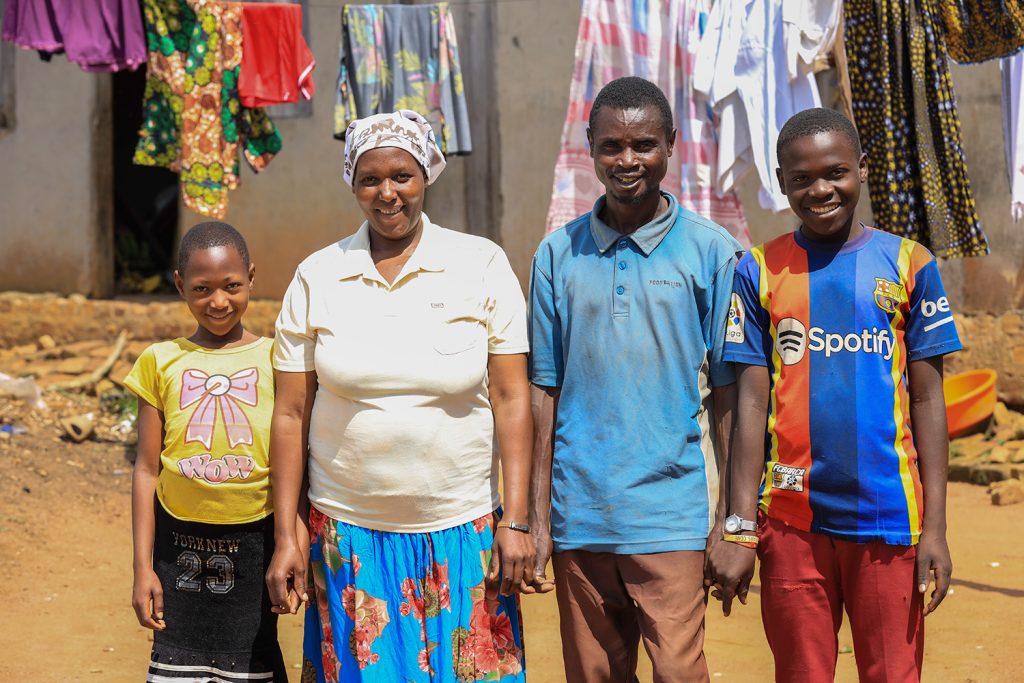
Sarah Turyasiima and her husband, Alex Alinitwe, live in Buterevu Village, Nkaakwa Sub-County in Kyegegwa District, together with their five children, three daughters and two sons. For several years, the family depended almost entirely on small-scale seasonal crop farming for survival. They had no livestock, no business, and very limited sources of income.
"I earned UGX 5,000 (about 1 Euro ) from casual farm labour, which we used for food and other small household items, while Alex earned an average of UGX 13,000 (less than 3 Euros) from construction work. However, most of it was spent on alcohol," recalls Sarah.
Their limited income made it nearly impossible to cover basic necessities such as nutritious food, school fees, decent housing, healthcare, and clean lighting. At the same time, climate-related soil degradation reduced agricultural productivity, while poverty-induced anxiety contributed to frequent domestic violence.
"I was already frustrated by earning so little and spending much of it on alcohol. Whenever my wife asked for money to support the family, I would direct my anger at her and often resort to violence," admits Alex.
Sarah repeatedly sought help from neighbours and local leaders, but counselling sessions brought only temporary relief before the violence resumed. The family's situation steadily worsened. They experienced recurring domestic disputes, malnutrition, and poor living conditions, while becoming increasingly dependent on the goodwill of neighbours for basic essentials including salt, matches, emergency medical aid, kerosene, and food.
In December 2025, Sarah's household was enrolled in the Uganda Refugee Resilience Initiative (URRI), a project funded by the Royal Danish Embassy. Through the initiative, the couple participated in practical training sessions on gender equality, environmental conservation, climate-smart agriculture, Village Savings and Loan Association (VSLA), and good animal husbandry practices, among other topics.
"The gender trainings helped us improve our relationship as husband and wife. As a result, we started working together in livestock farming and other household income-generating activities," reflects Sarah.
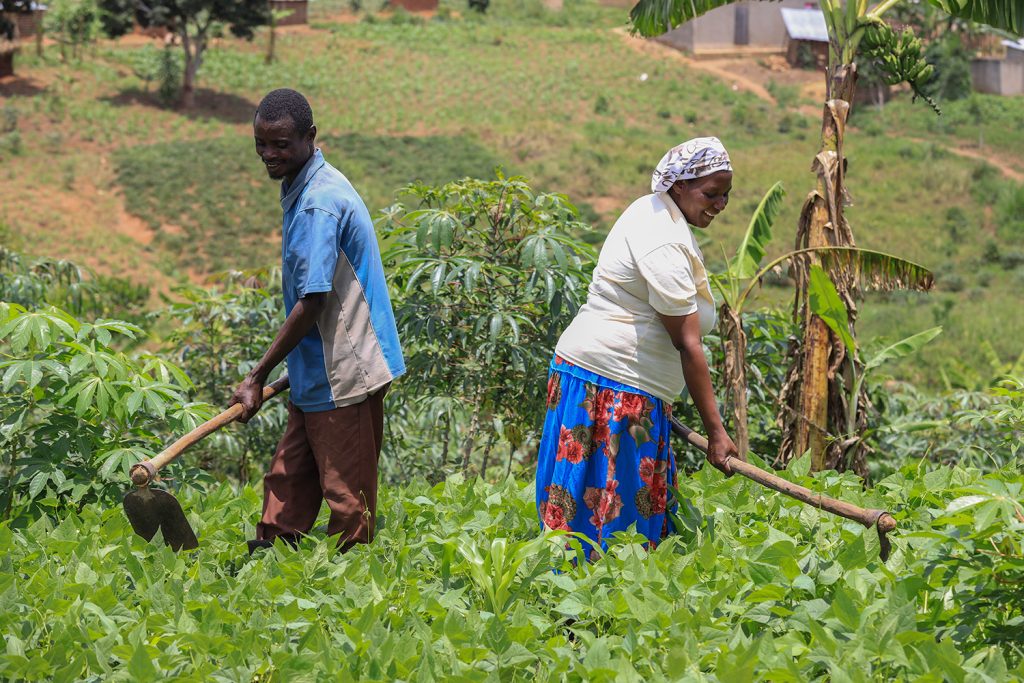
Working as a team, Sarah and Alex gradually invested in livestock and began buying and selling animals whenever the need arose. Today, they own two goats, two sheep, and ten hens. The couple also applied the climate-smart agricultural practices, including line planting, the use of improved seeds, and the application of organic manure to improve soil fertility and crop productivity.
"We planted one acre of maize, spending about UGX 800,000 (about 170 Euros) on land rental, improved seeds, manure, planting, spraying, and weeding. We harvested fifteen bags, which we sold for approximately UGX 1,500,000 (about 320 Euros), all while intercropping beans to feed our family," explains Sarah.
Beyond farming, the project introduced the couple to a practice that had previously been unfamiliar to them: saving. Sarah and Alex now save approximately UGX 8,000 (about 1,70 Euros) every week through their Village Savings and Loan Association. It has also enabled them to access loans when needed and maintain separate family savings. Through these efforts, they were able to purchase essential household items, including a solar panel for lighting and phone charging.
"With support from the Village Savings and Loan Association, we started a small retail business selling groceries, raw food items, and spices. The daily income from the business helps us meet basic household needs such as food, school supplies, and medical care," says Sarah.
As their livelihoods improved, the family's living conditions began to change as well. Sarah and Alex moved into a better rental home and steadily increased their household assets, including utensils, jerrycans, bedding materials, and clothing.
"Today, all of our children sleep on mattresses, have blankets, and attend school regularly, and the domestic disputes are no more," declares a proud Sarah.
The couple plans to continue working together to invest in their children's education, expand their businesses, and strengthen their savings. They are also committed to maintaining proper record-keeping practices to ensure that the knowledge and skills gained through the project continue to benefit their family.