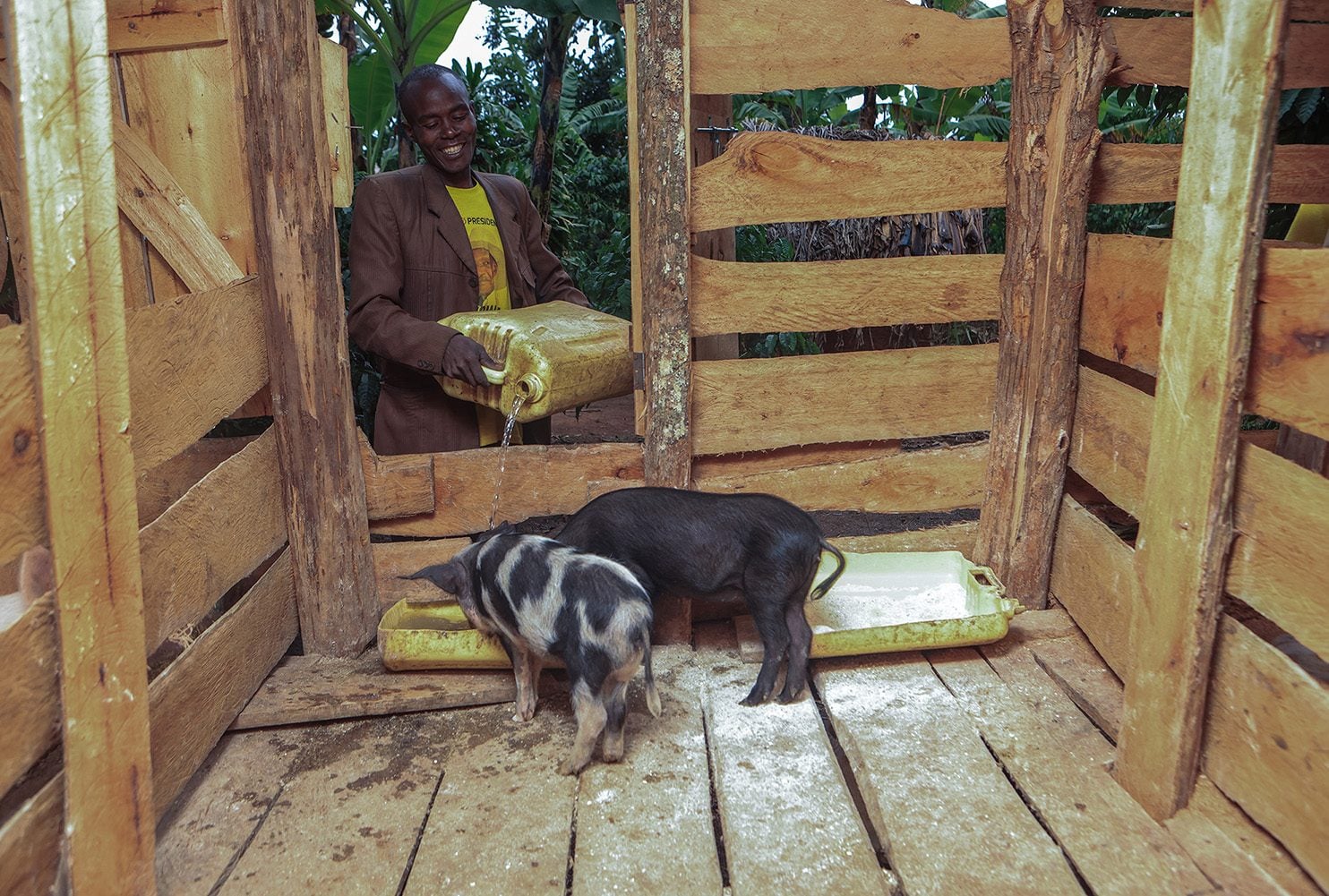
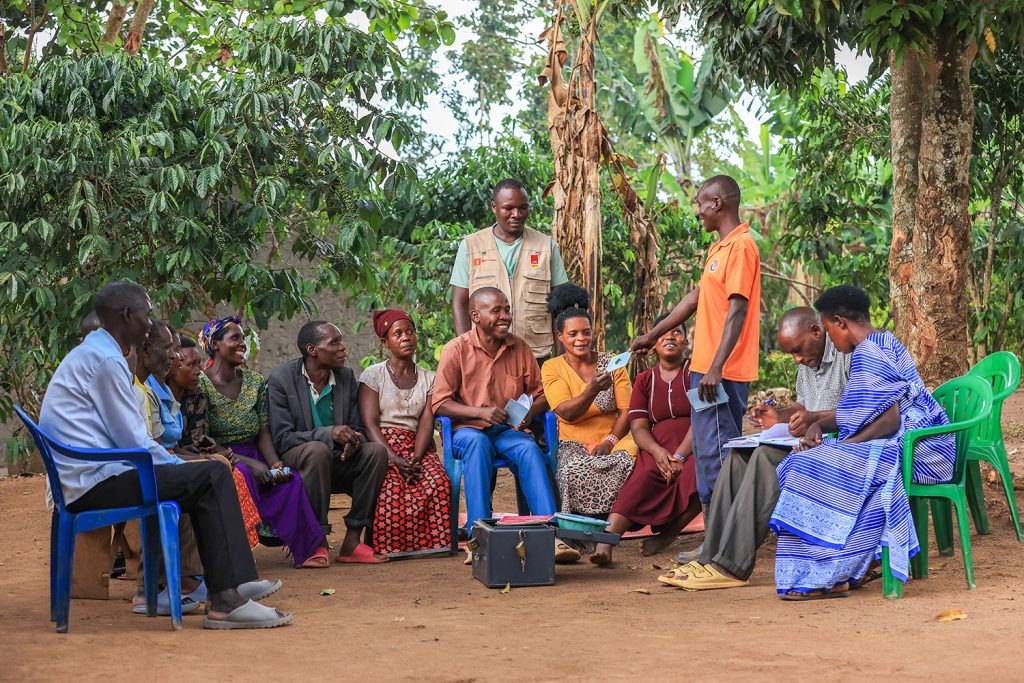
In Kaingani Village, in western Uganda, 15 farmers came together in October 2022 to find ways to improve their families’ lives. Nine men and six women formed the Kaingani Maize Growers Group, officially registering it at sub-county level and building on the bonds of solidarity already present in their community.
They began by setting up a simple savings scheme. Each member contributed UGX 500 a week, approximately 10 euro cents, and the money collected was given to one member at a time, in rotation. It was a modest way to help one another cover everyday household expenses. But as family needs grew, the group realised that these small contributions could only go so far. Low incomes and difficulties repaying loans made it even harder to save money or invest in activities that could generate more income.
For most members, farming was the main source of food and livelihood. They grew maize and beans primarily for their own consumption, often using farming practices that limited their harvests. Making ends meet remained a daily challenge: some children attended school irregularly, and families struggled to put enough nutritious food on the table.
Financial hardship also put pressure on relationships within households, sometimes leading to conflict. Yet the ties between community members remained strong. Even when resources were scarce, they continued to help one another whenever they could. This spirit of solidarity was the starting point for the group’s efforts to build more secure livelihoods for their families.
In July 2025, the group joined the Uganda Refugee Resilience Initiative (URRI), funded by the Royal Danish Embassy. Through the project, members took part in capacity-building activities covering Good Agronomic Practices (GAP), Climate-Smart Agriculture (CSA), animal husbandry, collective marketing, Village Savings and Loan Association (VSLA) management, sexual and reproductive health and rights (SRHR), food and nutrition, environmental and natural resource management (ENRM), and gender equality and household relations.
“These interventions equipped members with practical skills and knowledge to improve their livelihoods, household well-being, and financial resilience.”
Kenneth Ndyamwesiga, the Group Chairperson.
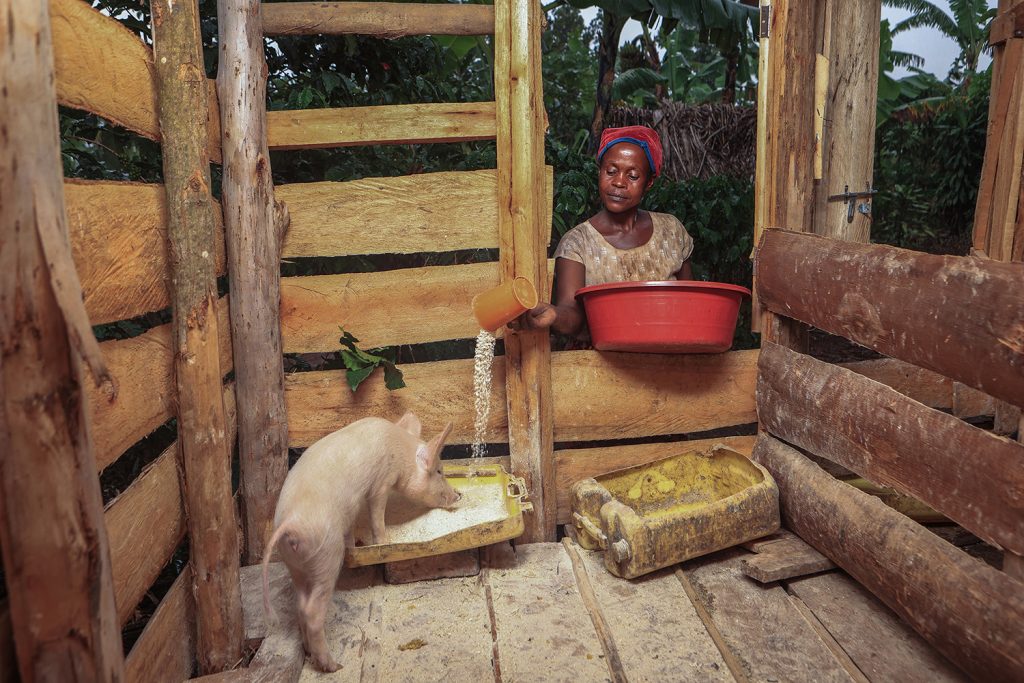
Through the project, the group received (approximately 250 euros), which they invested in pig farming. Building on their animal husbandry training, members purchased four pigs — two of improved breeds and two of local breeds — and constructed a pigsty. They also began using pig manure to fertilise their crops.
The project connected the group with a district veterinary officer, who provided further training in pig management, disease prevention and good practices for running a pig farming enterprise.
"Through accessing loans, the Village Savings and Loan Association has enabled us to meet basic household needs, purchase improved seeds for farming, and pay school fees. It has also strengthened our saving culture by helping us save with clear goals in mind,"
Jackline Tushabeomwe, a group member.
Following training in Climate-Smart Agriculture (CSA) and Good Agronomic Practices (GAP), the group began cultivating land collectively. During the second planting season of 2025, members cultivated one acre of maize. They invested part of the savings, while the URRI project provided improved seeds, a knapsack sprayer, organic fertiliser, pesticides, gumboots, a watering can and a tarpaulin.
The group generated income from maize sales, enabling each member to purchase a pig and start or expand pig farming at household level. The remaining proceeds were reinvested in the group’s agricultural activities for the next planting season.
"In the first planting season of 2026, we planted half an acre of maize and a quarter acre of groundnuts. We spent part of our savings on land rental, improved maize seed variety Longe 8H, organic fertilisers, pesticides, and labour."
Kenneth Ndyamwesiga, the Group Chairperson.
When unfavourable weather conditions affected the group’s harvest that season, the maize produced was used to feed their pigs, while the groundnuts were sold to generate income. The proceeds helped the group rent land for the next planting season, cover veterinary care for their pigs and purchase supplementary feed, allowing them to maintain their farming activities despite the poor harvest.
Members have also put their new knowledge into practice at home.
"I currently apply the lessons from the group at household level through produce bulking. We learnt early planting, proper line planting, crop spacing, vegetable growing, primary and secondary tillage. Growing vegetables such as cabbage and tomatoes at home has helped us reduce household expenses because we no longer need to buy them," says Benon Tumwesigye, a group member.
Gender training has also helped improve household relationships and decision-making.
"The gender trainings helped me reduce my alcohol intake. We now share household responsibilities and practise joint decision-making," says Steven Tusingwire, a group member.
Today, many group members are engaged in livestock farming, including pig rearing, goat keeping and poultry production. Others have started trading agricultural produce, beekeeping, craft production and vegetable growing. Household savings have increased, more children are attending school, and families are better able to meet their basic needs.
Building on this progress, the group plans to purchase a plot of land and establish a produce store to strengthen collective marketing and improve storage. Members also aim to expand the group's pig farming enterprise by distributing piglets from its existing stock. Their goal is for each member to have at least five pigs at household level, creating opportunities for more sustainable income.