

AVSI in Ecuador
- Quito HQ Office
Av. 6 de Diciembre 30-50 y Paul Rivet. Edificio El Pinar. Floor 9, Office 9
Phone: (+593) 02 392 3238
[email protected] - Colta Office
Casa Comunal de Cicalpa Viejo (behind the Archi Basílica de la Virgen de las Nieves Church). Sicalpa Parish
Phone: (+593) 02 392 3238 - Guayaquil Office
José Santiago Castillo y Aurelio Falconi. Cdla. Kennedy. Guayaquil – Guayas
Phone: (+593) 0980962443 - Santa Elena Office
Casa Comunal barrio Alberto Spencer: Fausto Fajardo y Martha de Roldós / Plot #1, Block 17-B / Unit for the Prevention, Recovery and Treatment of Chronic Child Malnutrition (UPRT)
Phone: (+593) 02 392 3238 - Lago Agrio Office
Av. 9 de Octubre y 12 de Febrero. In front of Unidad Educativa Lago Agrio
Phone: (+593) 0981604805 - Tulcán Office
Víctor Manuel Peñaherrera S/N. Hermano Miguel y Machala. Cdla. del Maestro
Phone: (+593) 0963560637 - Huaquillas Office
Cdla. 1ro de Mayo, Tungurahua Street between Av. Hualtaco and 10 de Agosto
Phone: (+593) 0963458162
AVSI started its activities in Ecuador with an education project targeting children living in vulnerable conditions in marginalized urban neighborhoods. In 2016, AVSI expanded its intervention in the country through emergency response projects following the earthquake in Manabí, a coastal province in western Ecuador, as well as actions addressing the growing challenges associated with Venezuelan migration flows.
The current context in Ecuador remains highly challenging. In 2025, the national poverty rate reached 24.0%, and extreme poverty stood at 10.4%, while in rural areas it reached 41.7% and 25.1%, respectively (ENEMDU, 2025).
AVSI’s presence in Ecuador focuses on accompanying individuals and communities in situations of vulnerability, addressing key social challenges such as security, chronic child malnutrition, economic inequality, and gender-based inequality through integrated projects.
In Ecuador AVSI addresses chronic child malnutrition, access to adequate housing, and human mobility, and contributes to strengthening security and social rehabilitation systems, while promoting human dignity, autonomy, access to rights, and the construction of safer, more inclusive, and resilient communities.
Chronic child malnutrition: a multisectoral approach
At the national level, chronic child malnutrition stands at 19.3% among children under two years of age and 17.5% among children under five (ENDI, 2024).
Since 2024, AVSI Ecuador has been implementing the project RAÍCES – Red de Acción Integral para la Educación y Salud Nutricional, in partnership with the Center for Nutritional Recovery and Education (CREN), and in consortium with Sembrar Foundation and Universidad Internacional del Ecuador, with funding from the Fondo Ítalo Ecuatoriano de Desarrollo Sostenible (FIEDS). The project operates in Santa Elena and Sicalpa, rural territories severely affected by chronic child malnutrition (CCM).
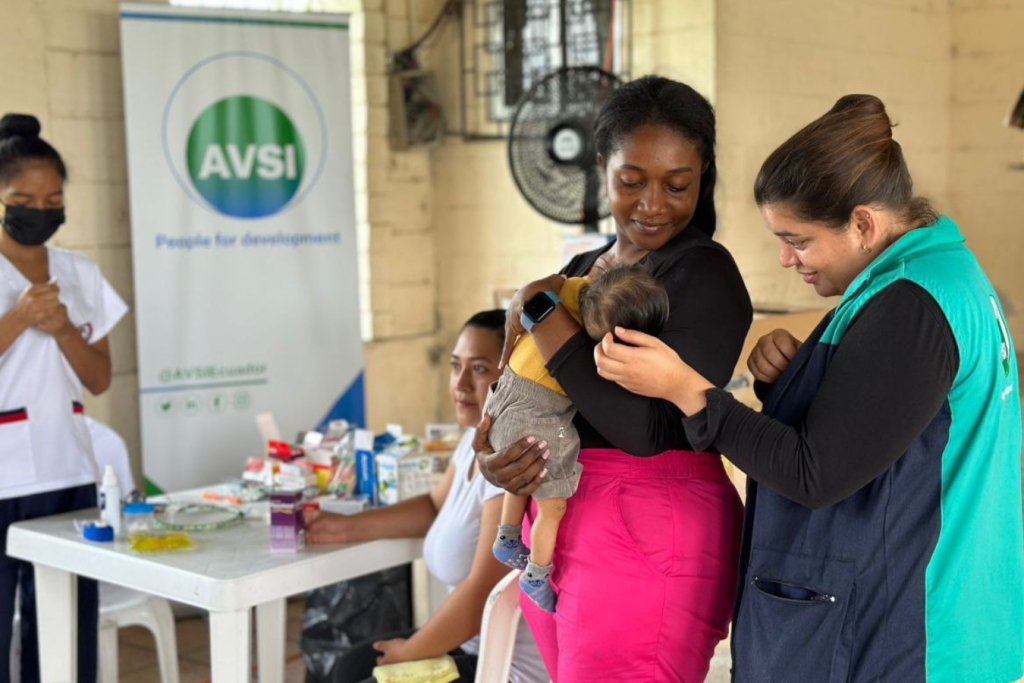
RAÍCES proposes a Territorial Management Model that brings together families, communities, local authorities, health institutions, and civil society organizations in a coordinated effort to prevent, reduce, and treat CCM. To this end, AVSI Ecuador has adapted and equipped two community centers, transforming them into Units for the Prevention, Recovery, and Treatment (UPRT) of CCM.
The project also implements capacity-building processes for community leaders, families, and local officials, aimed at strengthening the community social fabric.
In addition to field-based interventions, RAÍCES incorporates a scientific research component in collaboration with Universidad Internacional del Ecuador, focused on strengthening intestinal microbiota to support nutritional recovery in early childhood through the use of local foods from Sicalpa and Santa Elena.
The articulation between scientific evidence, community action, and family-centered support positions the project as a pioneering experience in Ecuador.
Emerging migration challenges in Ecuador
Ecuador is currently facing a severe security crisis, marked by increased violence linked to organized crime, resulting in internal displacement, weakened community cohesion, and heightened protection risks—particularly for children, adolescents, and women.
This situation is compounded by regional human mobility dynamics driven by the Venezuelan crisis, sociopolitical instability, and economic deterioration across several countries in the region. These factors have intensified migration flows and humanitarian needs among people on the move and host communities alike.
AVSI Ecuador responds to these dynamics through two key projects: Mujeres Echando Raíces (MERA) and Respuesta Holística para Personas en Emergencias Humanitarias (HOPE).
MERA: strengthening access to adequate housing for migrant women and host communities
MERA is an international cooperation initiative led by the Government of France through the Agence Française de Développement (AFD) and Expertise France. The project aims to strengthen the protection, empowerment, and socio-economic integration of migrant women and women from host communities in Cali (Colombia) and Quito (Ecuador).
In Ecuador, AVSI implements the project’s adequate housing component, which directly supports migrant women—especially Venezuelan women—and vulnerable women from host communities who struggle to access safe and dignified housing. The intervention prioritizes women facing heightened vulnerability, including survivors of gender-based violence, by addressing the practical, financial, and structural barriers that prevent them from securing stable rental accommodation.
The project provides an integrated support system that combines specialized case management, targeted financial assistance, and the creation of a network of informed and sensitized landlords. This approach facilitates effective access to the right to housing for women in situations of vulnerability.
In parallel, MERA strengthens protection networks and services at both local and national levels, contributing to safer living environments, improved well-being, and greater autonomy for women.
Grounded in the Housing First approach and informed by a strong gender perspective, MERA promotes access to rental housing while also contributing to the prevention of and response to gender-based violence, as part of a comprehensive protection and rights-based strategy.
HOPE: strengthening protection and humanitarian response for people on the move and host communities
The binational HOPE project, implemented by AVSI Ecuador, ADRA Ecuador, and ADRA Perú, with funding from the Directorate-General for European Civil Protection and Humanitarian Aid Operations (DG ECHO), aims to improve the quality of life of refugees, migrants, and vulnerable local populations in Ecuador and Peru through an integrated humanitarian response focused on urgent needs and risk prevention.
HOPE operates in four prioritized locations in Ecuador and one in Peru, selected due to high levels of human mobility and vulnerability. The project adopts a territorial and integrated approach, articulating specialized services and strengthening community and institutional networks to ensure access to basic rights and promote safe and dignified environments.
The intervention integrates actions in protection, health and mental health, food security, water, sanitation and hygiene (WASH), and emergency shelter, providing immediate and complementary assistance to people and families on the move.
HOPE also strengthens local protection networks and inter-institutional coordination, contributing to community recovery and resilience in crisis contexts.
Other Human Mobility Projects
Between 2018 and 2023, AVSI implemented the Activados project in Ecuador in collaboration with UNHCR, aimed at fostering the integration of migrants and refugees into host communities. The initiative adopted an integrated approach focused on community protection, livelihoods, and access to adequate housing.
In 2020, AVSI launched the Integrados project, funded by the U.S. Department of State’s Bureau of Population, Refugees, and Migration (PRM) and implemented in partnership with COOPI. Active until 2024, the project strengthened protection, livelihoods, and community infrastructure, while supporting civil society organizations to deliver a more sustainable response to human mobility challenges.
Institutions that protect: strengthening security and justice for social cohesion
The ITAJUS – Fortalecimiento Institucional del Sistema de Seguridad y Justicia del Ecuador project, implemented by AVSI in consortium with ILLA, aims to contribute to Ecuador’s social and economic development by strengthening public institutions linked to security, justice, and the penitentiary system, while promoting institutional efficiency, transparency, human rights, and social rehabilitation.
In a context marked by deteriorating security and recent penitentiary crises, ITAJUS builds upon international cooperation efforts to enhance operational and training capacities of key actors within the justice and security chain and to strengthen inter-institutional coordination.
The intervention is structured around two complementary pillars: institutional strengthening through technical assistance, specialized training, and process improvement; and the development of rehabilitation and social reintegration programs, including a pilot socio-labor insertion program for persons deprived of liberty.
With nationwide coverage, ITAJUS directly benefits persons deprived of liberty and institutional actors and indirectly benefits the Ecuadorian population by contributing to improved security, institutional governance, and democratic coexistence.
Other security and social rehabilitation projects
The Segunda Oportunidad project (2021–2024), supported by AVSI-USA and co-funded by the Weyerhaeuser Family Foundation, was implemented at the Centro de Rehabilitación Social Regional de Cotopaxi to strengthen rehabilitation and social reintegration processes for women deprived of liberty.
Through training in information technologies (ICT) and entrepreneurial skills, the project provided certified training, accompaniment, and practical experiences aimed at improving autonomy, self-esteem, and labor insertion opportunities. The intervention addressed structural barriers affecting women in detention, including educational, economic, and psychosocial challenges.
Education and Distance Support Programme
In the education sector, AVSI Ecuador, in collaboration with the Sembrar Foundation and CUET, supports children and adolescents through the Distance Support Programme in the provinces of Pichincha and Manabí, safeguarding family rights and promoting comprehensive educational development.
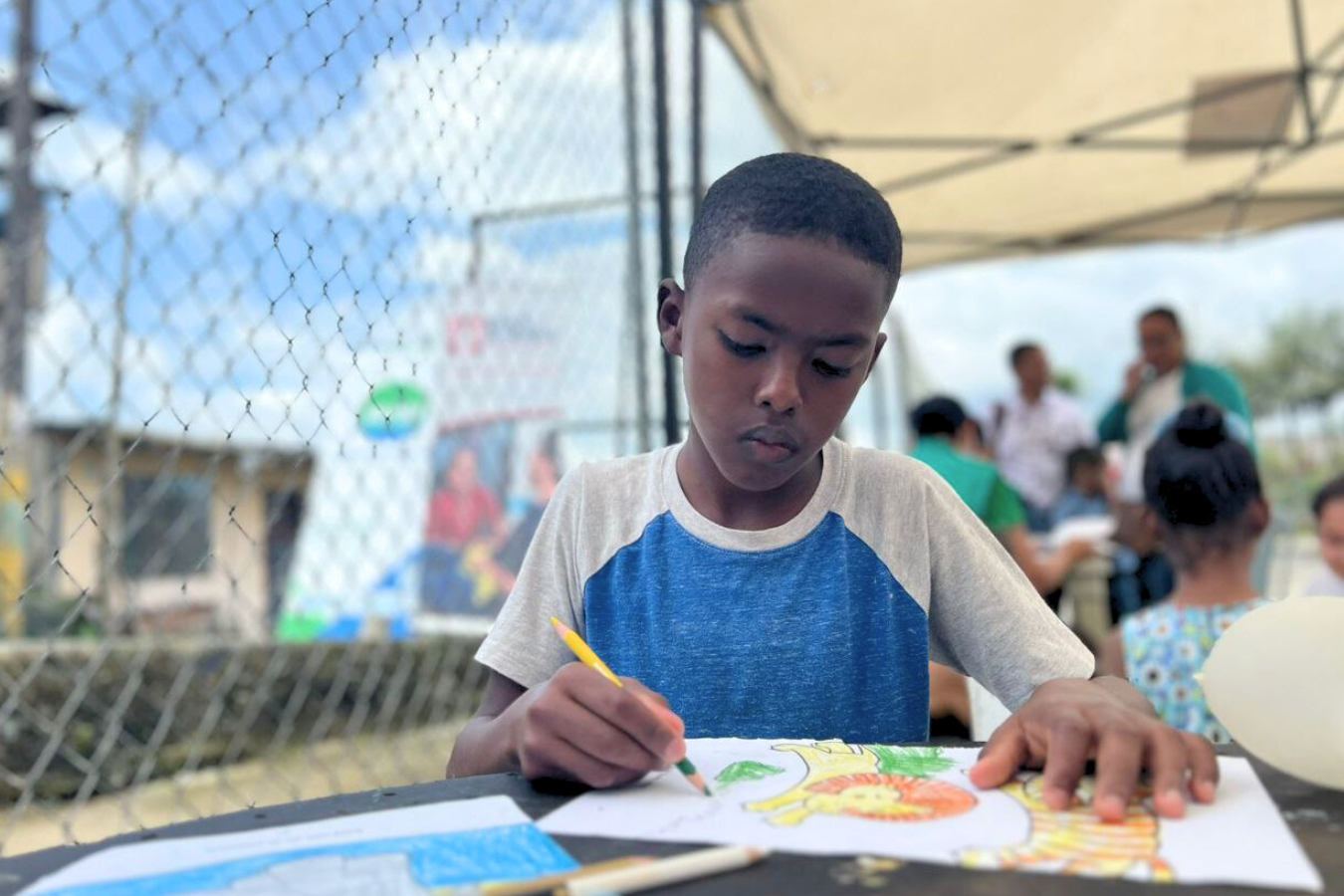
help a child grow up and thrive in Ecuador


