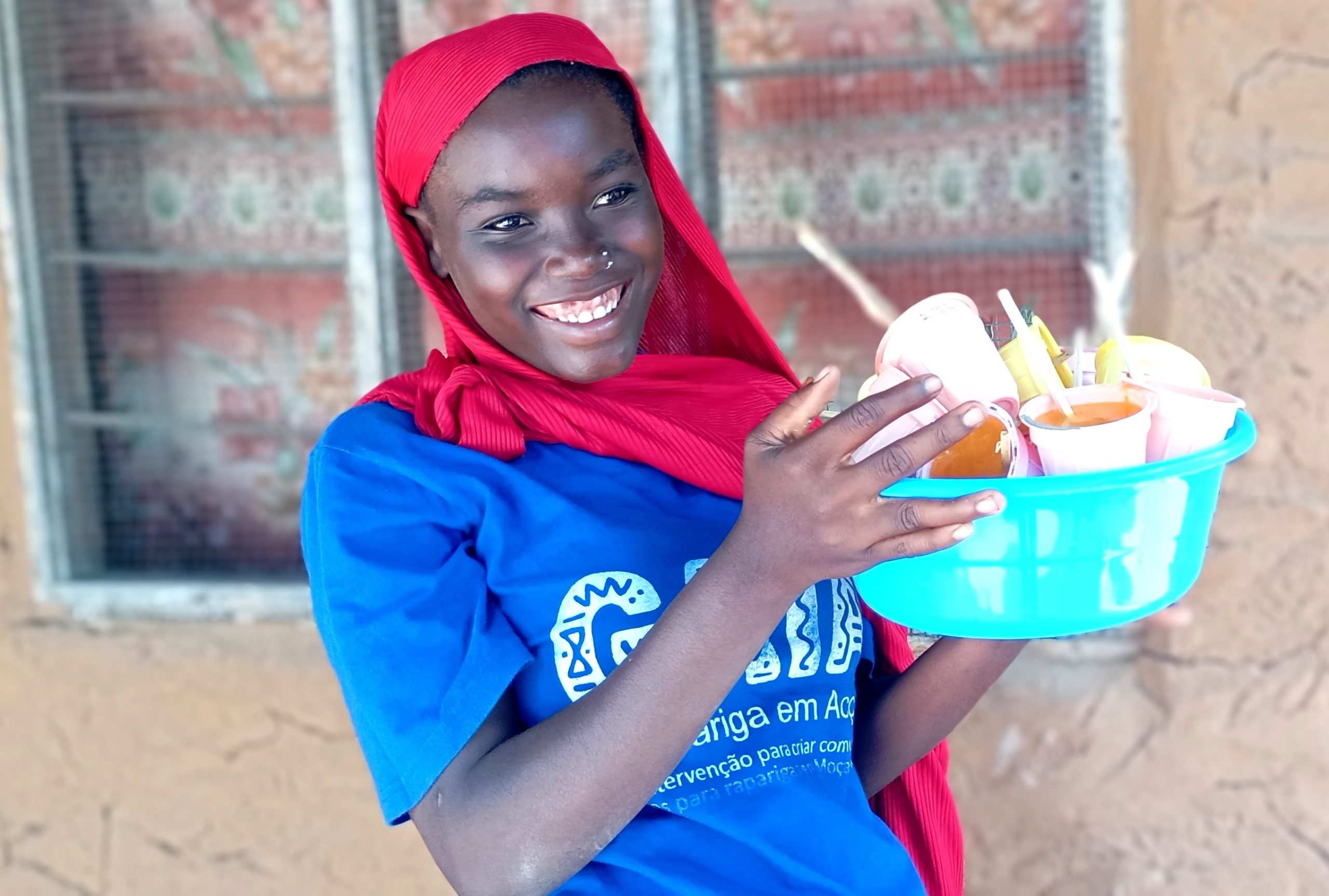
Joining a savings group gave Joana Shante, 17, more than access to a loan. Through discussions and learning activities organised by AVSI under the UNICEF-funded ELEVA project, she began exploring how she could start a small activity to help with her family’s expenses. Her experience in Palma, Cabo Delgado, illustrates how savings groups in Mozambique can connect financial learning with practical business decisions.
Shante is in Grade 7, her seventh year of schooling, at Unidade Primary School. Through the savings group, whose members save money together and lend to one another, she learned about saving, managing money and developing a business idea. Discussions within the group helped her consider what she could sell and how to use the earnings.
In May, she put her idea into practice. She borrowed 200 meticais (approxitemely EUR 3,00) from the group, bought a bag of charcoal and began selling it in smaller bundles from her grandparents’ home. She reports making a profit of up to 100 meticais per bag, which she divided between household expenses and savings.
Savings groups in Mozambique: from a first idea to a second activity
As she gained experience, Joana decided to try another product. She began preparing homemade frozen juice treats and selling them to neighbours and schoolmates for five meticais each.
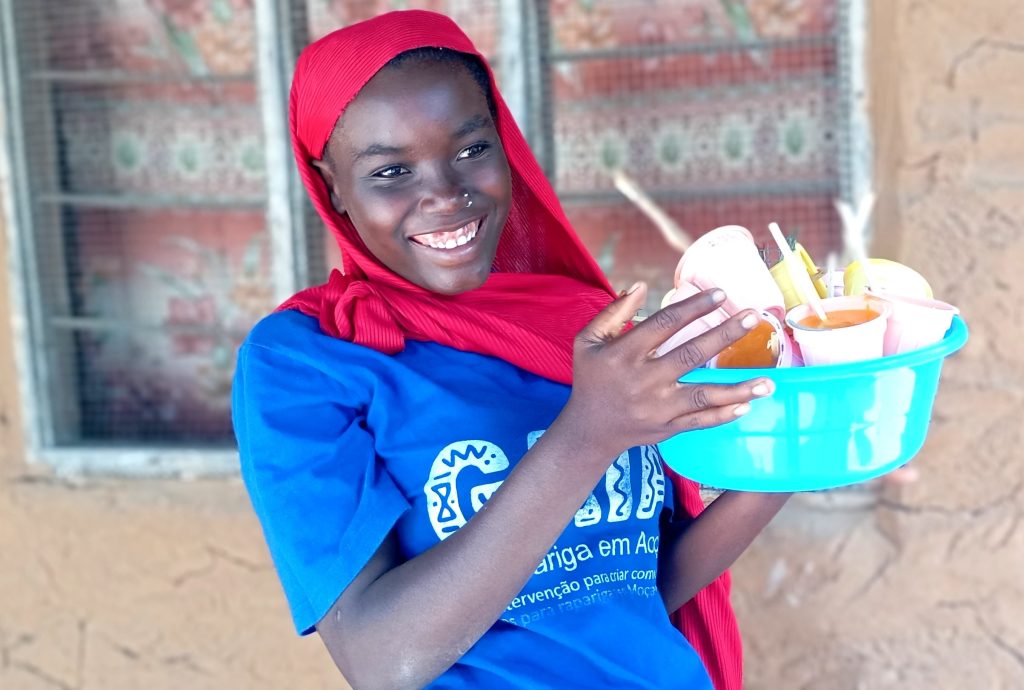
That decision marked a further step: she was expanding beyond her first activity and applying what she had learned about managing a business. Part of the money from sales goes towards new supplies, allowing her to continue selling. The remainder helps meet family needs and adds to her savings.
AVSI’s work through ELEVA project connects these practical decisions with financial and business training. Participants learn to set savings goals, plan how to use their money and understand what it takes to keep a small activity running. For Joana, this learning has accompanied a progression from considering an idea to trying it, managing the earnings and adding a second product.
ELEVA project: linking financial skills with girls’ safety
In Chiúre and Palma, girls need access to practical learning as well as people and services they can turn to when facing difficult decisions or risks of violence. A savings group can provide a place to learn about money, but the conditions at home and in the wider community also affect whether girls can use those skills.
ELEVA – Strengthening Girls’ Autonomy and Economic Empowerment in Safe Communities brings these elements together. Implemented by AVSI with UNICEF’s funds in the two Cabo Delgado districts, it combines life skills, financial education, business training and savings groups with activities addressing girls’ rights and protection.
The project marked its first year of implementation in September 2026.
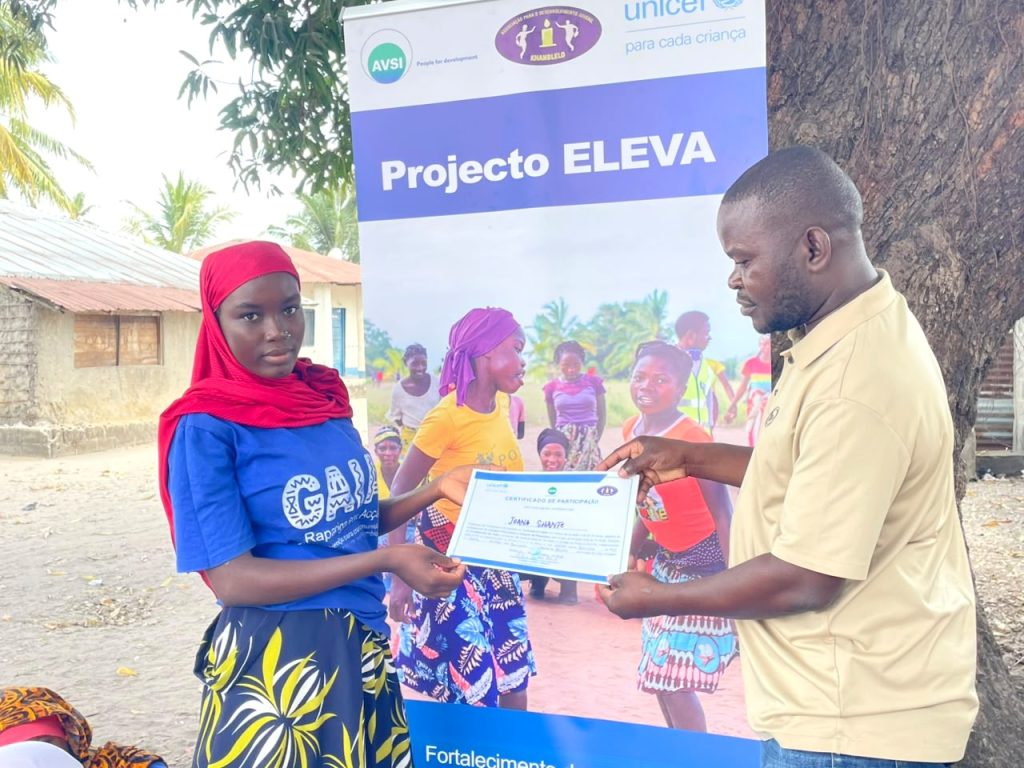
What the project has reached so far
1,099 girls have participated in GAIA, a series of group sessions where they explore decision-making, confidence, relationships and personal safety.
The project has also established and supported 32 savings groups. Among the girls who participated in GAIA, 413 were referred to financial and business training, connecting life skills sessions with opportunities to learn about saving and managing an economic activity.
Work extends beyond the girls themselves: 1,552 boys and caregivers have taken part in activities addressing girls’ rights and the role families and communities play in their safety. These discussions accompany activities to prevent gender-based violence and assist girls facing difficult circumstances
Next steps: reaching more girls by February 2027
By February 2027, ELEVA project aims to increase the number of active savings groups from 32 to 50 and bring referrals from GAIA sessions to financial and business training from 413 to 1,000 girls. It also aims for 1,000 girls and young women to demonstrate improved financial knowledge, helping them plan expenses, set savings goals and make informed decisions about small business activities.
Alongside this training, AVSI will continue working with caregivers and community members on girls’ rights, gender equality and protection from violence. The aim is to connect practical skills with family and community support, so that more girls can apply what they learn, make decisions with greater confidence and seek help when their safety is at risk.