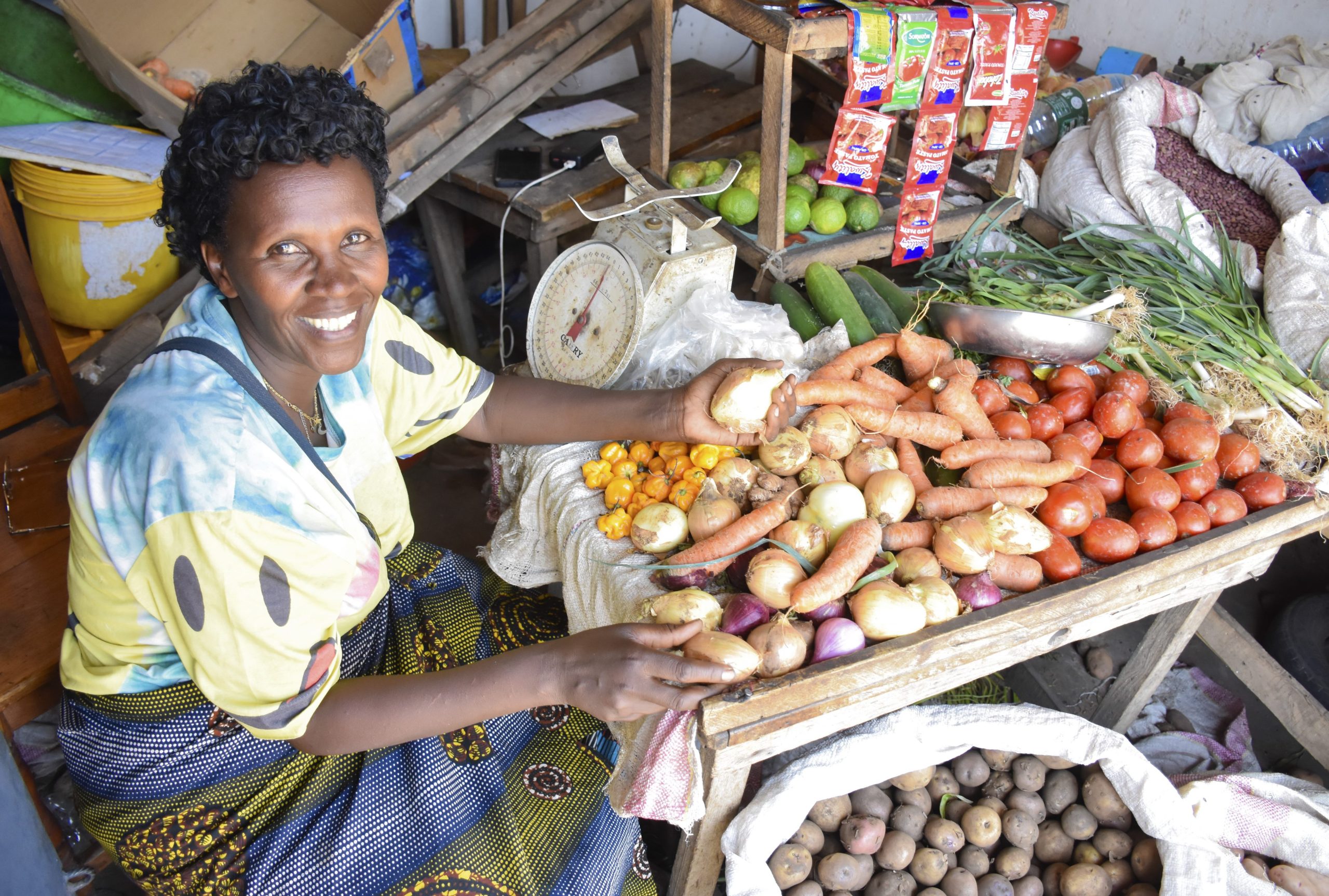
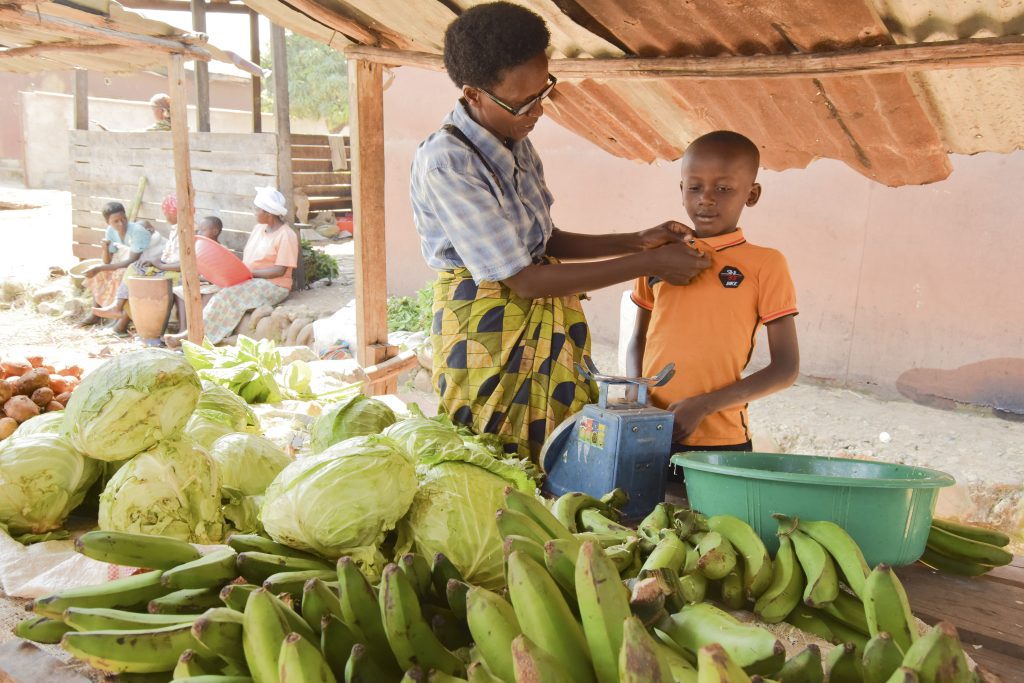
Savings groups in Burundi have helped Mukeshimana Marie Viola access loans to expand her grocery business in the Cibitoke area of northern Bujumbura. A mother of five, she sells fruit, vegetables, beans and rice. Through the Vyuka Kare savings group, she has borrowed from a fund built with members’ own savings and invested the money in her shop.
Viola joined the group with guidance from AVSI through its Distance Support Program, which has supported Jean Claude, Fabrice and Ariella, three of her children. Alongside school materials, tutoring and healthcare, the programme works with parents on household finances. For Viola, this has meant combining assistance for her children with access to money she can invest in earning a living.
What a saving group is and how it works in Burundi
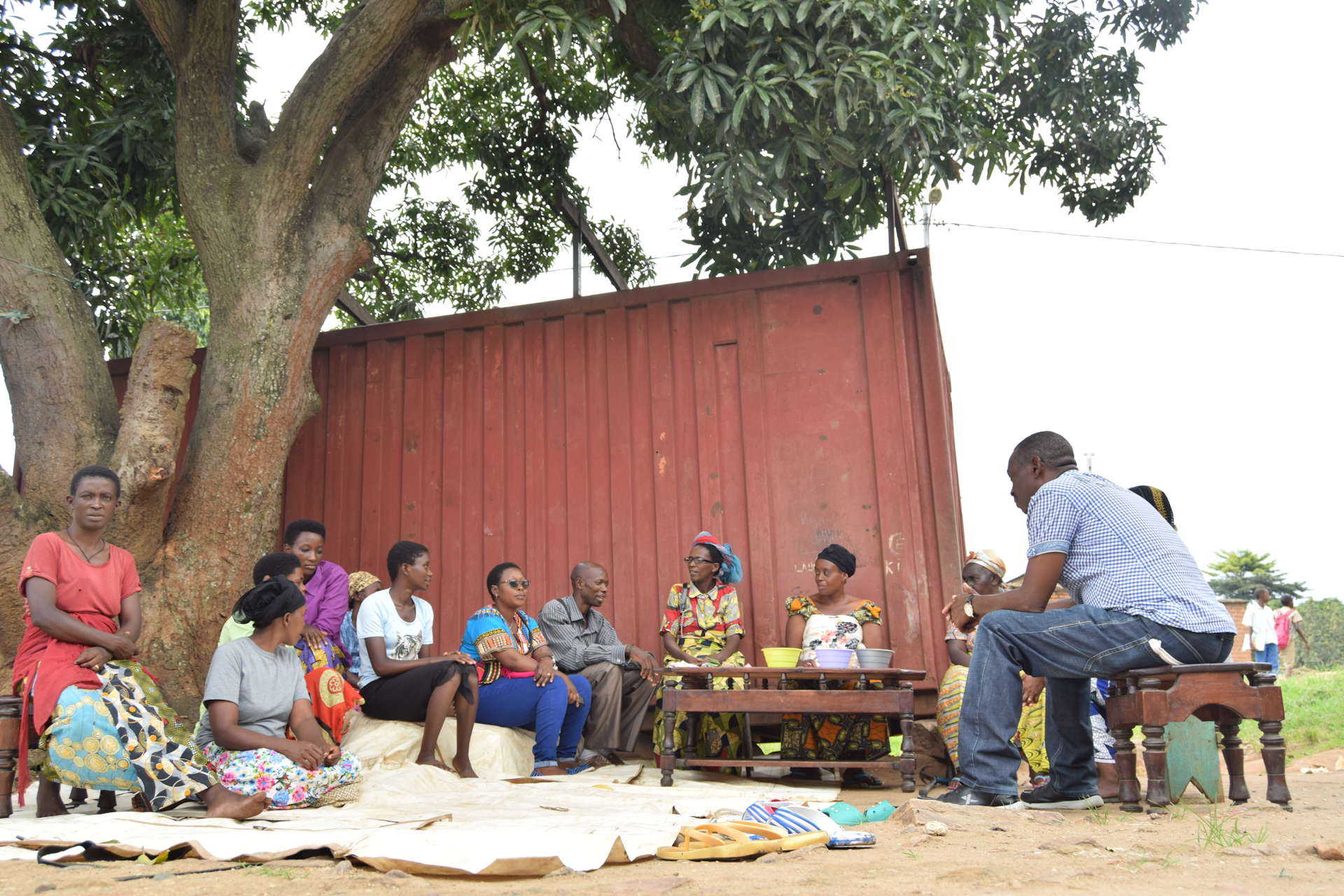
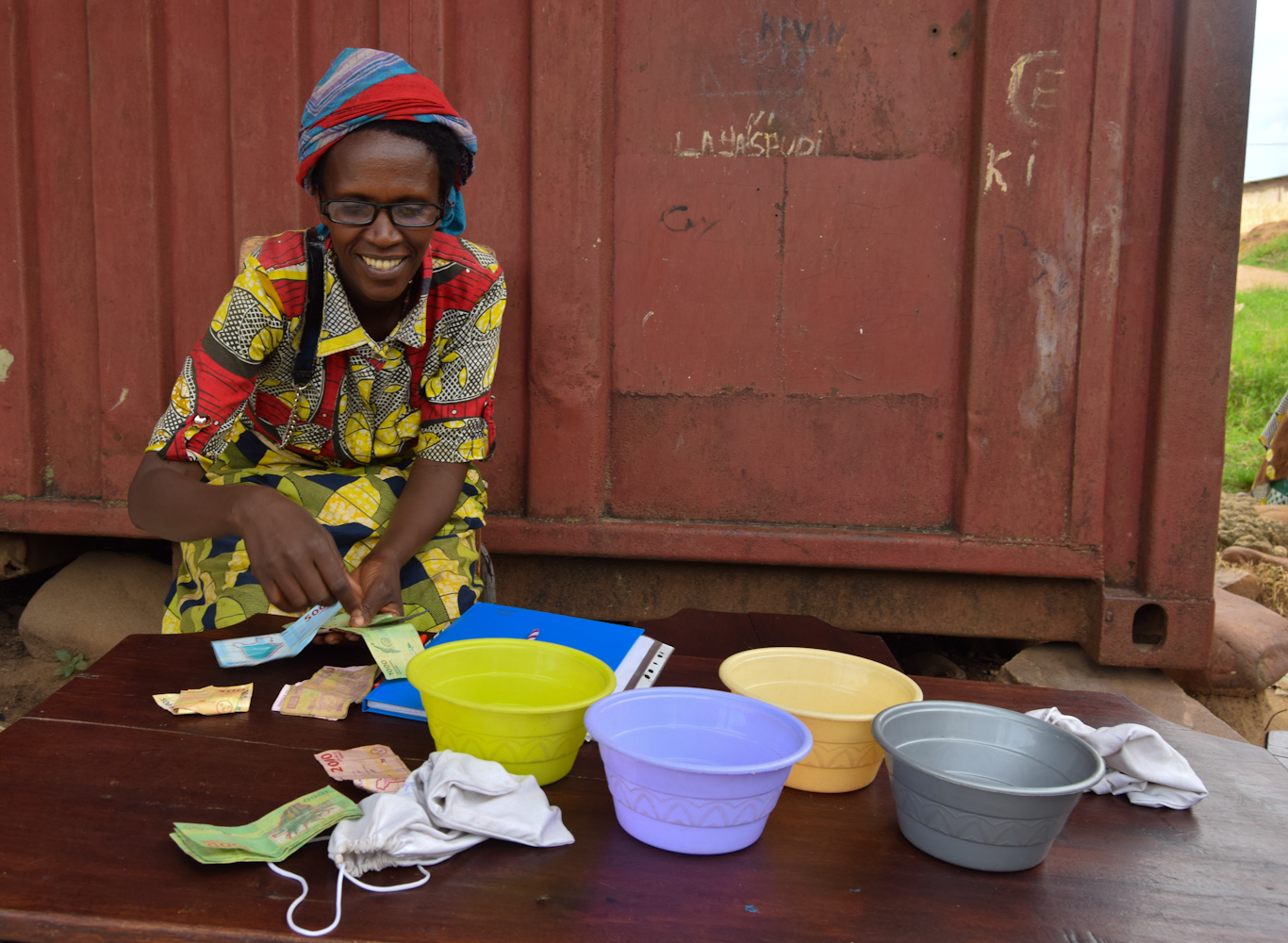
Vyuka Kare, meaning “Wake up early”, is a savings and credit group, known in French as a Communauté d’Épargne et de Crédit Interne (CECI). Members save money together and use the shared fund to lend to one another.
These groups typically have around 25 members. Borrowers repay their loans with interest, which increases the money available to the group. At the end of each agreed cycle, lasting up to six months, the accumulated funds are distributed among members in proportion to their savings.
Each member decides how to use their share, whether to invest in a business, cover household expenses or save again in the next cycle. A separate fund helps members facing personal or family difficulties.
For people who have limited access to banks or other financial services, these groups provide a way to save regularly and borrow from people they know.
From selling amaranth to stocking a grocery shop
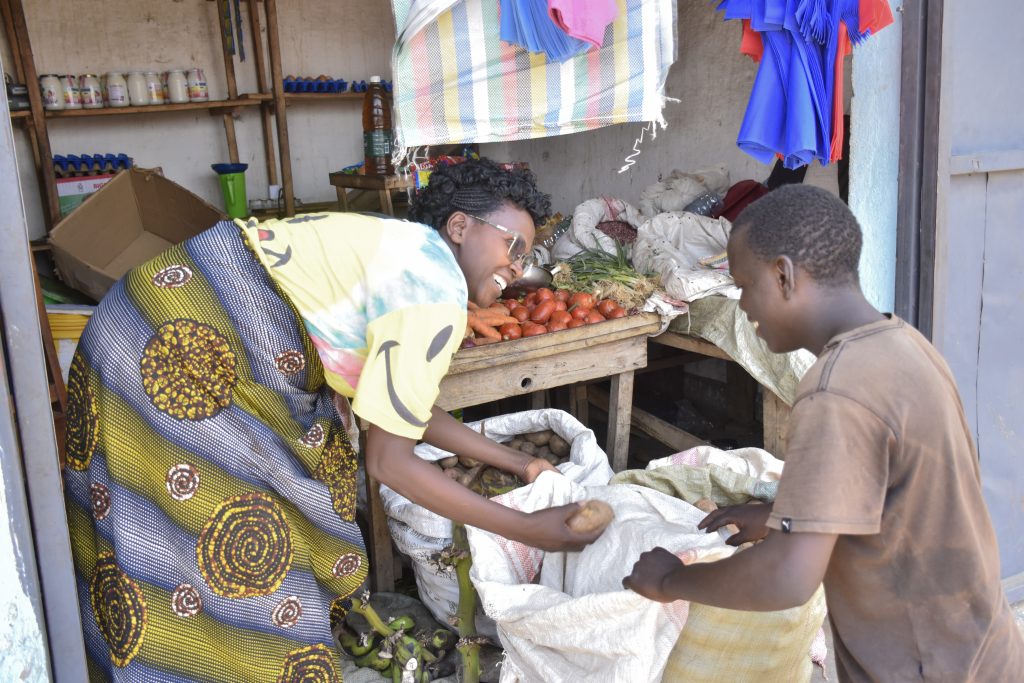
Before joining Vyuka Kare, Viola earned money by selling amaranth. Her husband was unemployed, and the family struggled to cover daily expenses. She had previously relied on an informal rotating savings arrangement to obtain small advances.
Through Vyuka Kare, she took out several loans to expand her business.
“After joining our CECI seven years ago, I took out several loans that allowed me to increase my business capital. The last time we shared our payouts, I received 820,000 Burundian francs (245 euros),” she says.
The loans and the money distributed at the end of the savings cycle gave her additional resources for the business. She later moved to a shop on a main road, where she sells a wider range of food. Viola reports earning more than she did from her earlier amaranth business.
The shop now provides income for her household. Her next goal is to buy a plot of land so the family can stop paying rent.
Supporting children means working with their families
Viola first met AVSI through her son, Jean Claude, who enjoyed visiting the nearby Mother, Children and Orphans Centre. He was subsequently enrolled in the Distance Support Programme.
Three of her children received assistance through the programme, including school materials, tutoring and healthcare. One child received nutritional support, while another underwent surgery on his leg. Her eldest son, Fabrice, later helped tutor other children enrolled in the programme.
For this family, support took two connected forms: responding directly to children’s educational and health needs, and helping their mother access a savings group to develop her business. The group gave Viola a way to borrow money for stock and build up savings while continuing to earn through her own work.
About AVSI’s Distance Support Program in Burundi
The Distance Support Programme began in 2001 as AVSI’s first program in Burundi, responding to the needs of children and families affected by the civil war that began in 1993.
In 2002, AVSI opened the Mother-Child and Orphan Centre in Cibitoke, northern Bujumbura. Most activities take place here: children attend tutoring sessions, use the library, receive counselling and psychological support, and participate in recreational activities and traditional music and dance workshops. The program also provides school uniforms and learning materials, while the centre’s canteen offers nutritional support to children experiencing malnutrition.
Parents take part in sessions on children’s rights, positive parenting, hygiene and healthy eating, including gardening activities. Some, like Viola, also join savings and credit groups, to save money and borrow for small businesses. The programme accompanies 26 groups with 625 members, most of them women.
This work with parents is part of the programme’s support for children. Alongside school materials, tutoring and healthcare, it helps families develop sources of income to cover everyday expenses. For Viola, that meant accessing loans to expand her shop.