
For the International Day of Rural Women, observed on 15 October, Joan Poni’s story draws attention to the work involved in turning agricultural produce into food for sale. In South Sudan, in the village of Minyori Boma (Yei River County, Central Equatoria State), Joan Pony prepares doughnuts, groundnut paste and chapati using skills learned after joining the Sajo Farmer Field School led by AVSI in 2025.
Joan, 30, is a farmer and mother of five children. Before joining the Sajo farmers group, she worked on her farm but struggled to earn enough from her harvests. She wanted to increase her income and lacked specific training in processing produce and managing a business.
International Day of Rural Women: a farmer’s work beyond the harvest
The International Day of Rural Women recognises women’s contribution to agriculture, food security and rural economies. Joan’s experience follows that work beyond cultivation: preparing ingredients, making products for customers and managing an additional source of household income.
At the Sajo Farmer Field School, agricultural learning was accompanied by training in food processing, choosing a business activity, planning and management. Joan and other participants practised preparing different foods and snacks, exploring how locally available ingredients could be processed into products for sale.
Joining the group and receiving the value-addition training has completely changed my mindset. I can now use these skills to make donuts, groundnut paste, and chapati, earning a steady income,
Joan Poni
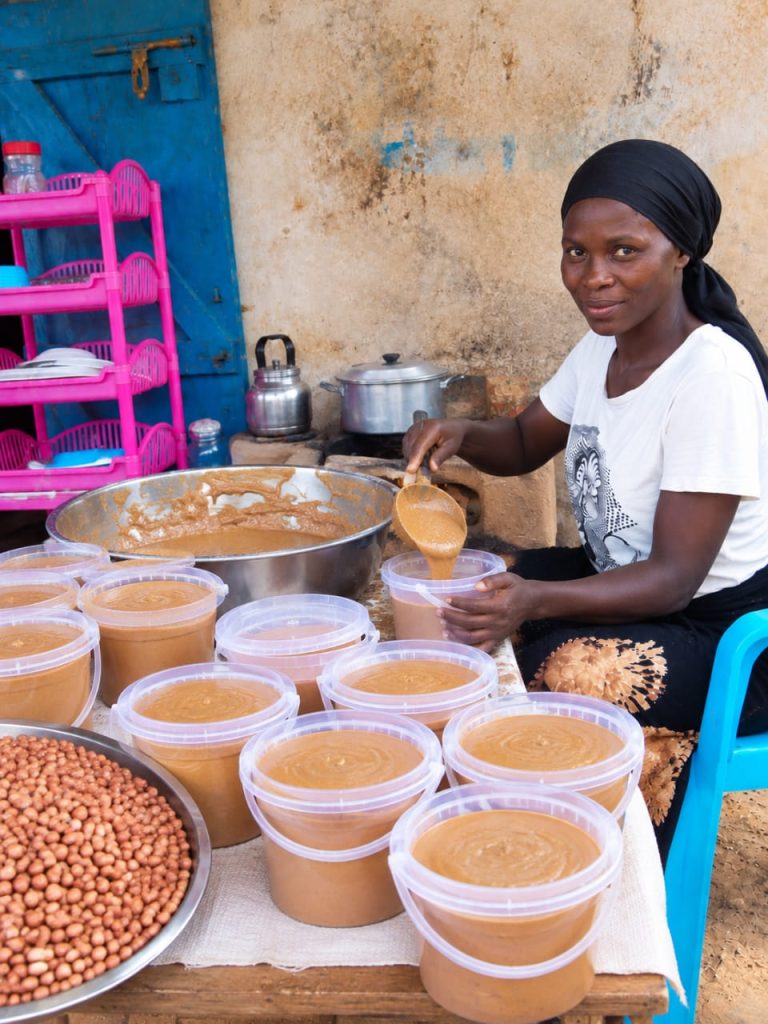
Combining agricultural skills with business training
The Sajo Farmer Field School receives assistance from AVSI in partnership with GIZ through the Community-Driven Rural Development (CDRD) project.
AVSI has trained more than 50 farmer groups across Yei and Magwi counties. Training covers farming techniques adapted to climate conditions, crop management, practices before and after harvest, and savings for agricultural activities.
For Joan and her peers, the business sessions added another set of practical skills: considering which products to sell, planning an enterprise and managing its activities. Learning to prepare food also prompted the idea of opening a restaurant to diversify their earnings.
Joan is already applying her training to food sales and gaining experience running a local tea business. She says the earnings help her pay for food and her children’s education.
“I can now feed my family and pay for my children's education, helping them grow into successful adults,” she explains.
About the CDRD project in South Sudan
The Community-Driven Rural Development project aims to improve agricultural production, food and nutrition security, and rural incomes in South Sudan. AVSI works with GIZ to deliver the activities described in Yei County, Central Equatoria State, and Magwi County, Eastern Equatoria State, where farmers receive agricultural and business training.
The project is funded by the European Union, the German Federal Ministry for Economic Cooperation and Development (BMZ), and the Kingdom of the Netherlands. GIZ lists the overall programme as running for seven years, from April 2022 to March 2029.