In a time of escalating global conflict, climate disasters, and shrinking budget allocations, humanitarian and development interventions are increasingly challenged to do more with less. Traditional aid programmes frequently prioritise immediate physical survival needs—such as shelter, food, water, and physical safety—while placing mental health and psychosocial well-being at the bottom of the priority list.
However, individuals affected by armed conflict, violence, and forced displacement face heightened risks of severe mental health challenges, including depression, anxiety, and post-traumatic stress disorder (PTSD). In middle- and low-income refugee-hosting nations, these emotional struggles are further exacerbated by poverty, social marginalisation, and limited socioeconomic opportunities.
In Uganda, for instance, an estimated 14 million people require mental health services, yet fewer than 100 psychiatrists serve the entire nation, leaving rural settlements and refugee-hosting communities largely underserved.
The SMILES Model: Pairing Economic Empowerment with Emotional Healing
To address these challenges, the Sustainable Market Inclusive Livelihood Pathways to Self-Reliance (SMILES) project integrates psychosocial support directly into its core livelihood coaching model. Recognising the close relationship between mental health and social context, SMILES addresses both mental health—an individual's ability to think clearly, manage emotions, cope with challenges, and build healthy relationships—and psychosocial well-being, which is shaped by family, community, culture, and life circumstances.
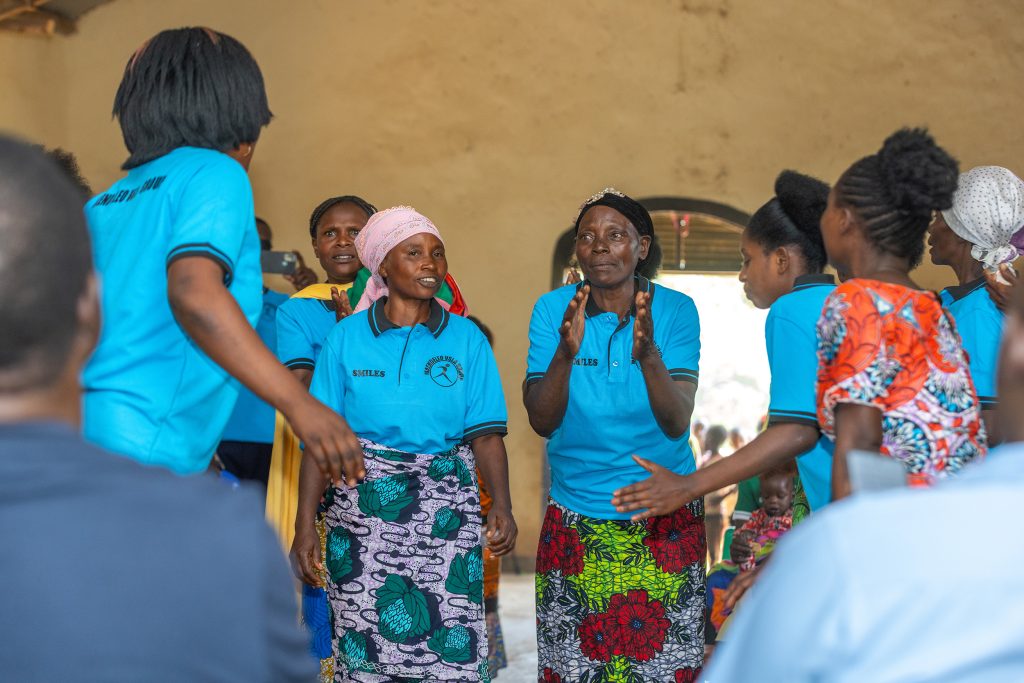
Rather than relying solely on formal clinical sessions, the SMILES project embeds interactive psychosocial activities at the end of every coaching session. By incorporating songs, games, drama, stories, videos, and dance, coaches create safe spaces for emotional expression, stress relief, and community connection.
To track participant well-being effectively, the project incorporates structured reflection and clinical assessment tools:
- The "Burden Scale" (Kagugu): A localised assessment tool helping participants reflect on and evaluate their personal stress levels.
- Standardised Clinical Screenings: Quarterly tracking using the Generalised Anxiety Disorder 7-item (GAD-7) scale for anxiety and the Patient Health Questionnaire-9 (PHQ-9) for depression screening.
- Structured Referral Pathways: Participants identified with severe signs of distress are referred for health, legal, WASH, protection, or specialised mental health services through a coordinated referral network.
Data from the SMILES projects Cohort One demonstrates a substantial reduction in anxiety and depression alongside marked improvements in participants' understanding of coping strategies. This emotional transformation empowers individuals to make rational decisions, adopt healthier coping mechanisms, and embrace sharing their struggles as a path to healing.
Insights from the SMILES project Cohort One data
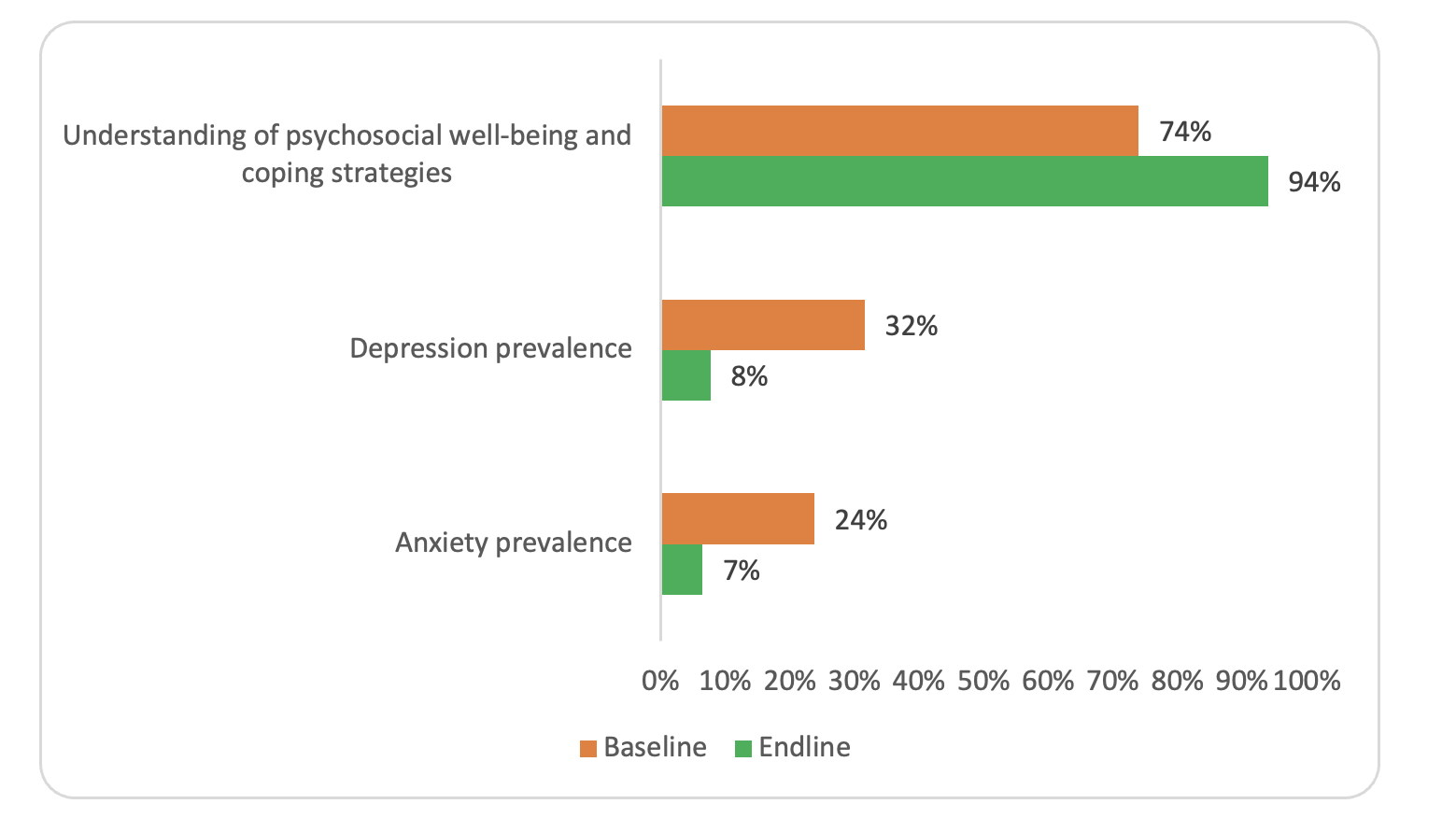
The table shows a substantial reduction in anxiety and depression alongside a marked improvement in participants’ understanding of psychosocial well-being coping strategies after integrating psychosocial support into livelihood programming.
Key Lessons for Humanitarian and Livelihood Programming:
The insights gained from the SMILES initiative offer critical lessons for development and humanitarian organisations:
- Continuous Psychosocial Engagement Must Be a Core Pillar: Continuous psychosocial engagement acts as the backbone of meaningful recovery rather than a temporary add-on. Consistent emotional support helps participants concentrate, learn, actively participate, and rebuild confidence while preventing drop-out rates and early distress from escalating into larger challenges. Programmes must intentionally plan, budget, and monitor psychosocial engagement with the same commitment as other core activities.
- A Structured Referral System Delivers an Effective Response: An impactful response requires staff and community workers to understand clear referral pathways for health, legal, WASH, protection, and mental health services. Maintaining an updated service directory and establishing feedback mechanisms strengthens coordination among partners and ensures no participant is left without assistance.
- Simple, Culturally Rooted Activities Drive Community Healing: Low-cost, culturally familiar activities like music, dance, storytelling, games, and quizzes play a powerful role in reducing stress, restoring social connection, and building resilience without fear or stigma. Overlooking these accessible activities misses a vital opportunity to restore dignity and support natural, community-driven healing.
Restoring Dignity and Sustainable Self-Reliance
Addressing basic needs alone is not sufficient for refugees and host communities to achieve lasting self-reliance. The SMILES project demonstrates that economic empowerment and emotional healing go hand in hand to achieve lasting transformation. Prioritising mental well-being ensures that economic gains are sustainable and that participants graduate with dignity, confidence, and the capacity to rebuild their lives.