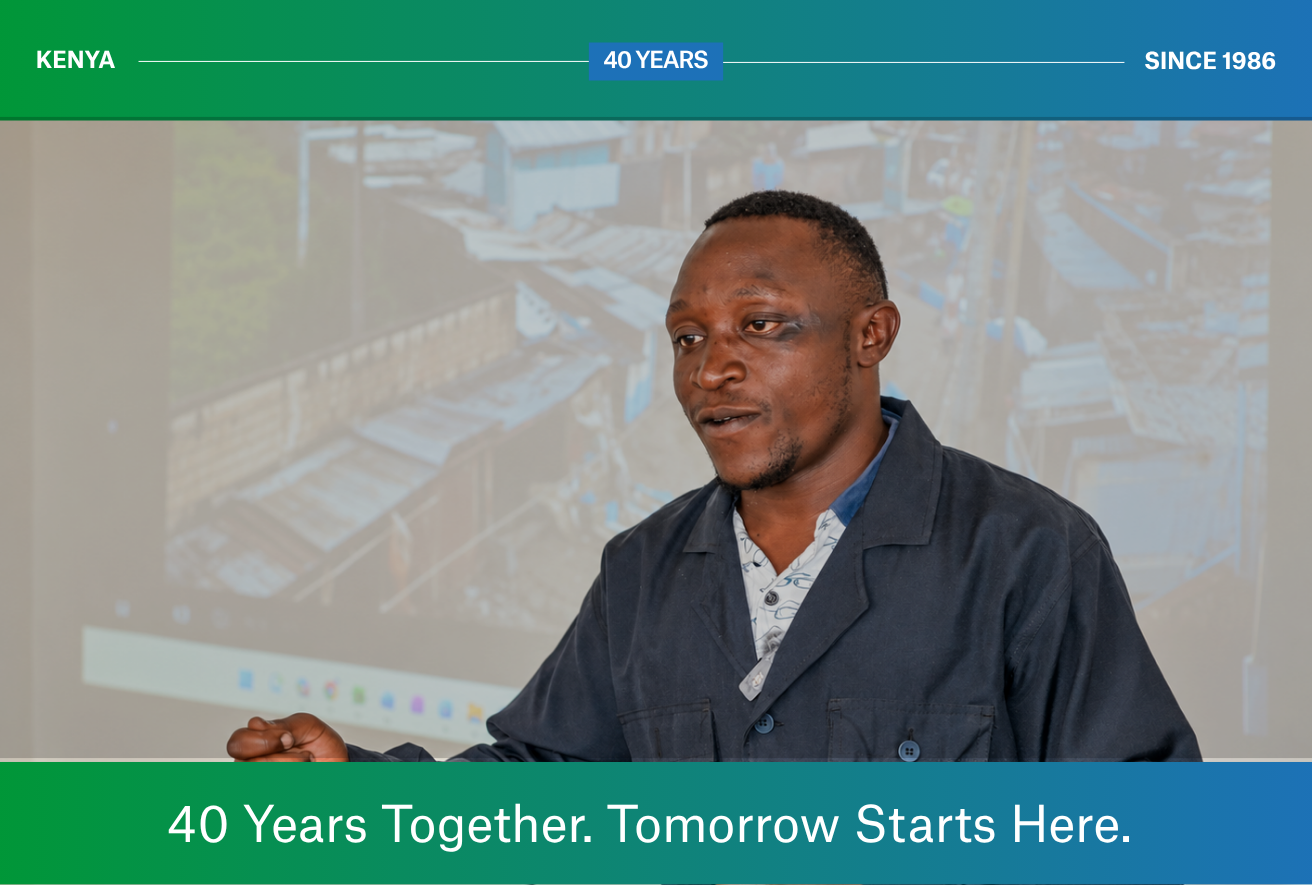
In 2026, AVSI Foundation marks 40 years of partnership in Kenya (1986–2026). Among the six stories we have chosen to share for this anniversary, Geofrey’s experience shows how community organisation can improve urban waste management and livelihoods. From collecting household waste to joining an association of 22 community organisations in Korogocho, his story illustrates how residents can work together to strengthen recycling and create local economic opportunities.
Starting in the neighbourhood
"My name is Geofrey Otieno. I am 28 and grew up in Nyayo village in Korogocho. I worked as a waste picker in Kisumu Ndogo.
My involvement in environmental conservation began in 2017, when I joined a community group focused on planting trees. As we worked in the neighbourhood, we also saw the need to address improper waste disposal.
Dumping was widespread, and waste was routinely transported to the Dandora Dumpsite. Pollution and the health risks associated with waste were part of everyday life.
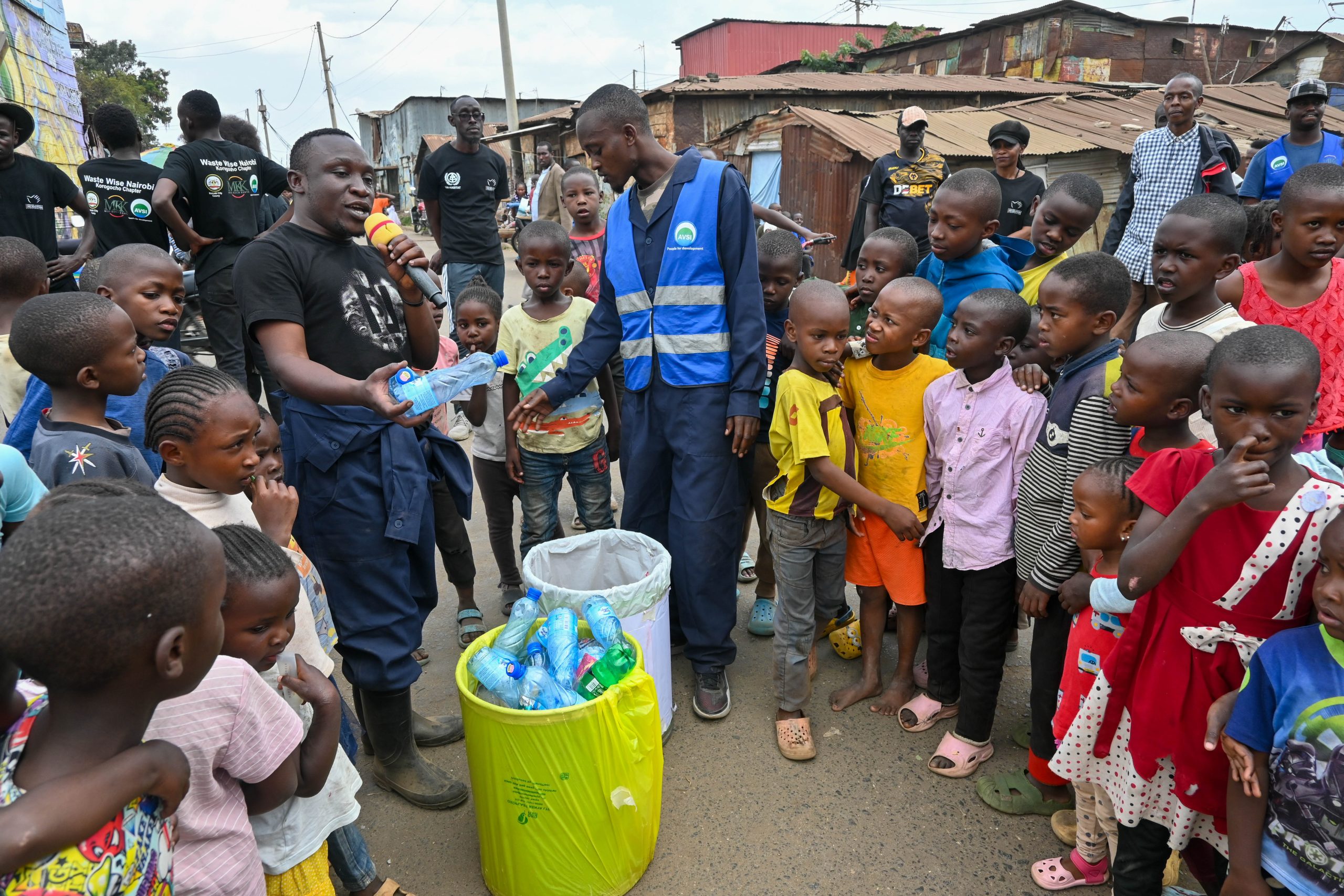
My colleagues and I began collecting waste directly from households for a small fee. We sorted recyclable materials and sold them to buyers.
It was a start, but without suitable infrastructure and organisation, there were limits to what we could do and how much we could earn."
Building a shared system
"Today, I am part of an umbrella association bringing together 22 community-based organisations from Korogocho’s nine villages.
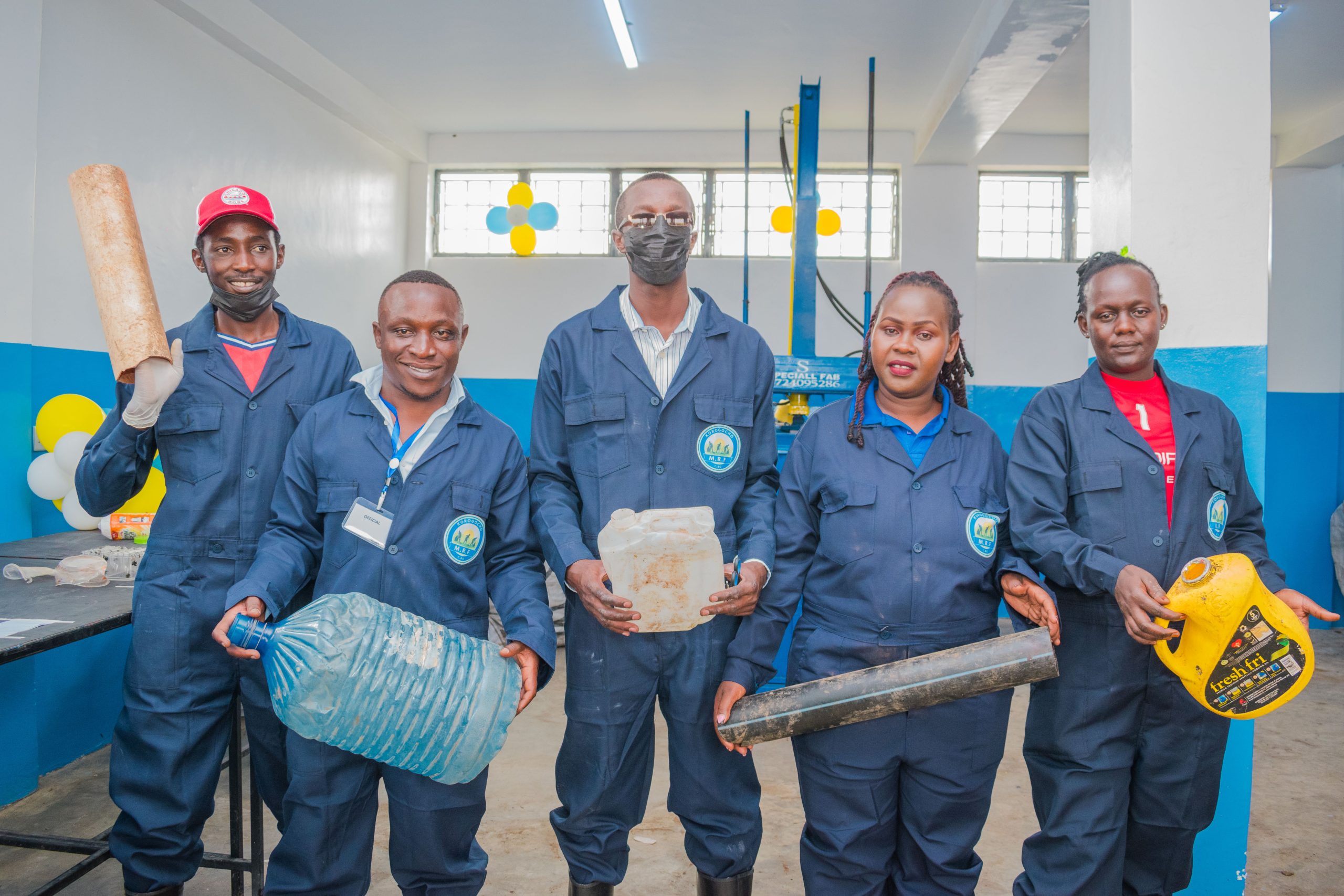
The association has a structured leadership system and manages a Material Recovery Facility, where we sort and aggregate the waste we collect. This was possible thanks to AVSI's interventions in the area.
The process starts in people’s homes. Households separate their waste using provided bins, and waste pickers collect it and bring it to the facility for further sorting.
By bringing recyclable materials such as plastics and cartons together in larger quantities, we can sell them at better rates. Organic waste goes to initiatives such as the Black Soldier Fly project.
For me, the important change is how we organise our work. Community members are building a system together and finding value in materials that were previously discarded."
Making waste picking more reliable
"The new system has made waste picking more organised. We have a clearer process, more predictable income and less dependence on middlemen.
It has also helped bring greater recognition to our work.
Our three-storey facility serves several purposes. Alongside waste recovery, it hosts community meetings and awareness sessions on social issues. Renting out spaces also generates income.
It has become a place where we can address environmental and social concerns together."
A long-term goal for Korogocho
"I have seen how unpredictable rainfall and flooding affect Korogocho. These challenges reinforce my belief that we need to act within our own community.
My goal is for Korogocho to process and recycle all its waste locally within the next 20 years, creating jobs and improving environmental health.
The system we are developing gives us a foundation to work towards that goal. It depends on households, waste pickers and community organisations each playing their part."
Looking ahead
Geofrey’s experience shows how community organisation and infrastructure can reinforce one another. The Material Recovery Facility provides space to sort and aggregate waste, while the association connects the people who collect it, manage it and find buyers for recyclable materials.
For AVSI, supporting sustainable urban development means strengthening these local systems: the organisations, skills and partnerships that help residents turn their knowledge into practical solutions.
Looking ahead, AVSI will continue to work with communities, public institutions, businesses and technical partners to improve waste management and strengthen livelihoods in informal settlements. Our commitment is to support locally led solutions that create safer working conditions, expand economic opportunities and help neighbourhoods respond to environmental challenges.
To discover the other stories collected for 40th anniversary of AVSI in Kenya visit the dedicated page.